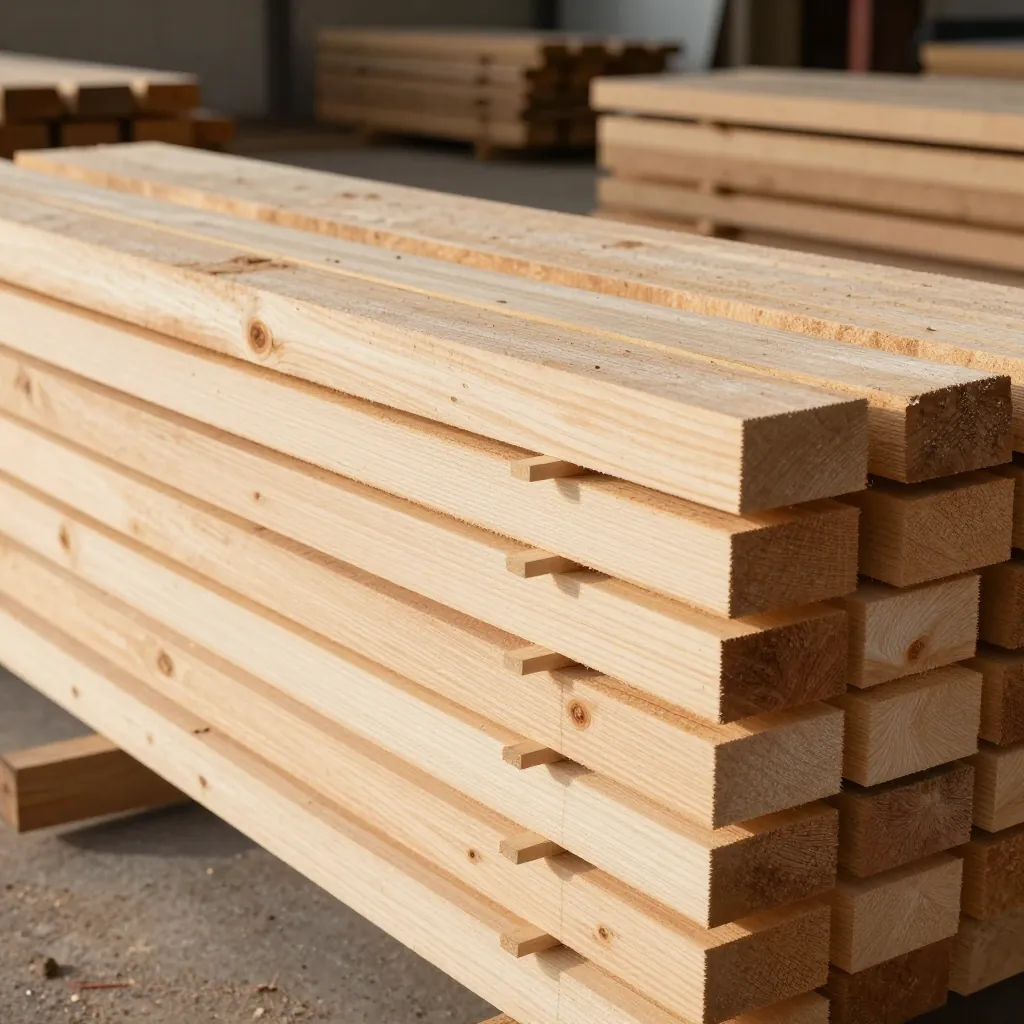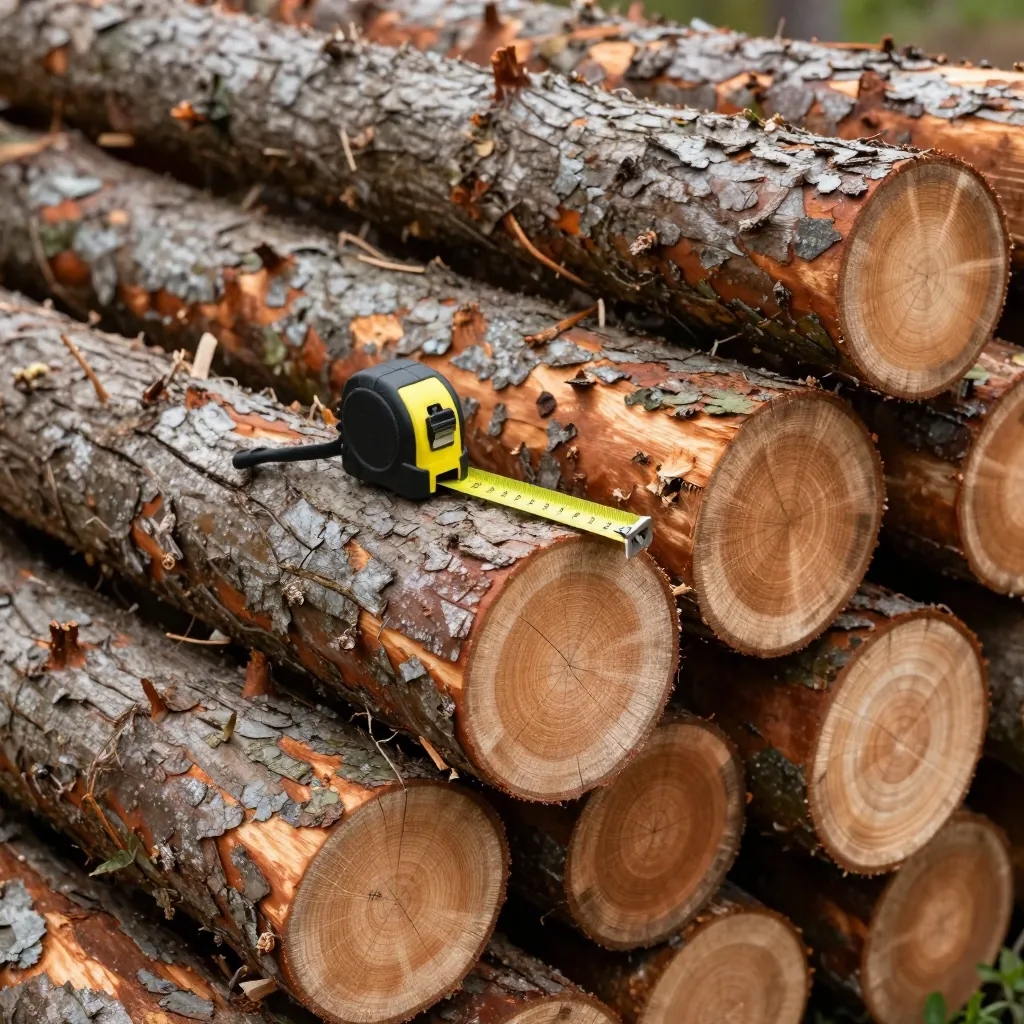

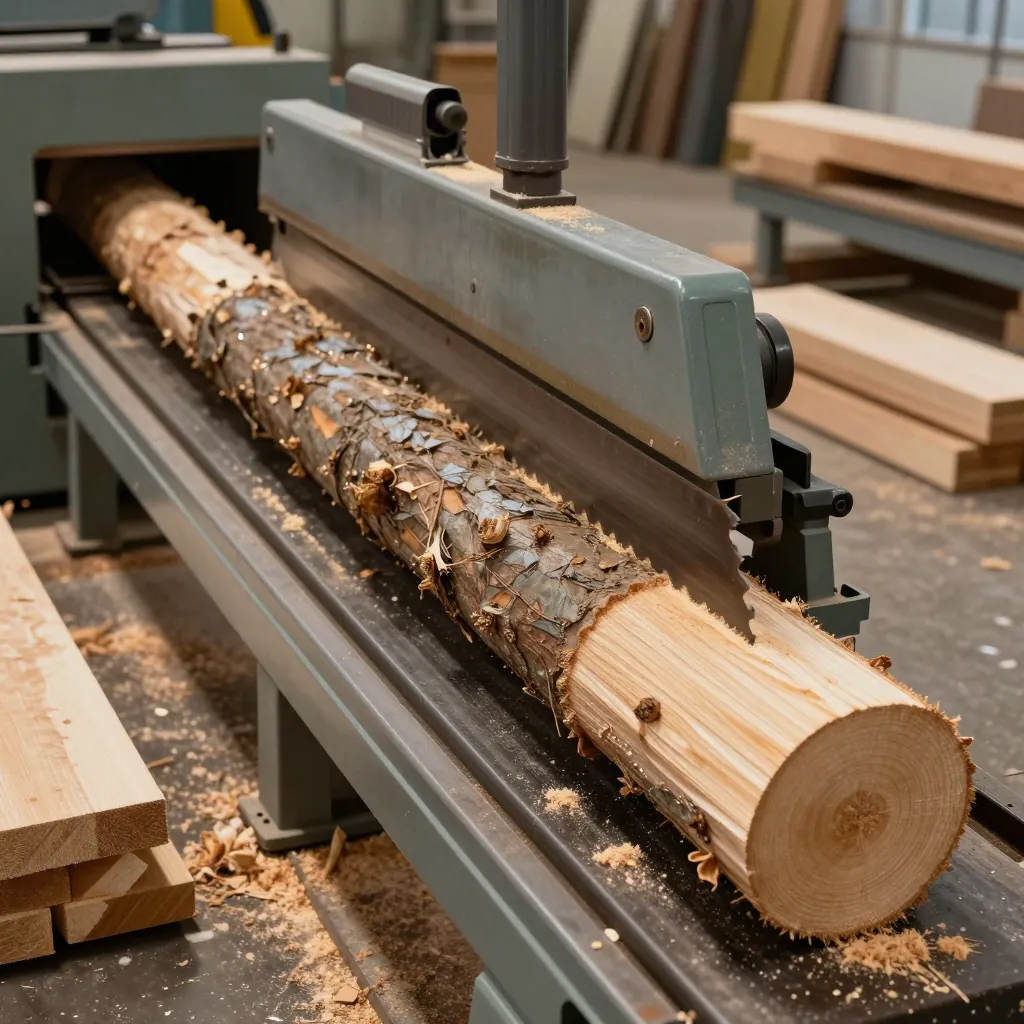
A tree becomes lumber in six basic steps: felling, bucking, log storage, sawing, drying and stacking. After the tree is felled and delimbed, the stem is cut into logs, the logs are sawn into boards and planks according to a chosen sawing pattern, and the lumber is dried to suit its end use and stacked correctly.
Decisions made at every step show up in the final product. The sawing pattern in particular determines how stable the lumber will be, what it will look like and how much usable wood the log yields.
When should trees be felled?
Where conditions allow, autumn and winter are the best felling seasons, mainly because:
- Insects and fungi are much less active in the cold, so felled stems are less exposed to blue stain, decay and insect damage.
- The tree is dormant, the bark is held firmly, and a falling tree does less damage to the surrounding trees and young growth.
- Frozen ground reduces soil damage from heavy machinery and makes extraction easier.
Contrary to a popular belief, the moisture content of the stem does not change dramatically between seasons; the real advantage of winter felling is the lower biological risk. Even winter-felled logs should leave the forest before the weather warms up in spring. Logs felled in spring or summer must be moved quickly, debarked if necessary and protected against end splits, fungi and insects.
Bucking: cutting the stem into logs
Once the tree is down, the branches are trimmed flush with the stem, the top is removed and the stem is cross-cut into lengths. This is called bucking. Good bucking means:
- Starting from the butt, the most valuable part of the tree.
- Placing cuts to isolate sweep, knot clusters, burls and rot, while keeping straight, clean sections as long as possible.
- Choosing lengths that match the mill’s and the customer’s lumber lengths, plus a trimming allowance.
The goal is the most valuable mix of lumber with the least waste. We explain how log volume is calculated in what is a log and which defects to look for in log defects.
Storing and protecting logs
Logs left in poor conditions quickly suffer insect attack, blue stain, decay, end splits and drying checks, so they should be sawn as soon as possible. When logs must wait, mills use:
- Sprinkling: piles are kept continuously wet so the wood stays above the moisture level fungi and insects need, and drying checks are prevented.
- Wet storage: logs are kept fully submerged in ponds or lakes; any part that floats above the surface is not protected.
- End sealing: wax or special sealants on the log ends slow rapid drying and splitting.
Sawing patterns: plain, quarter and rift sawn
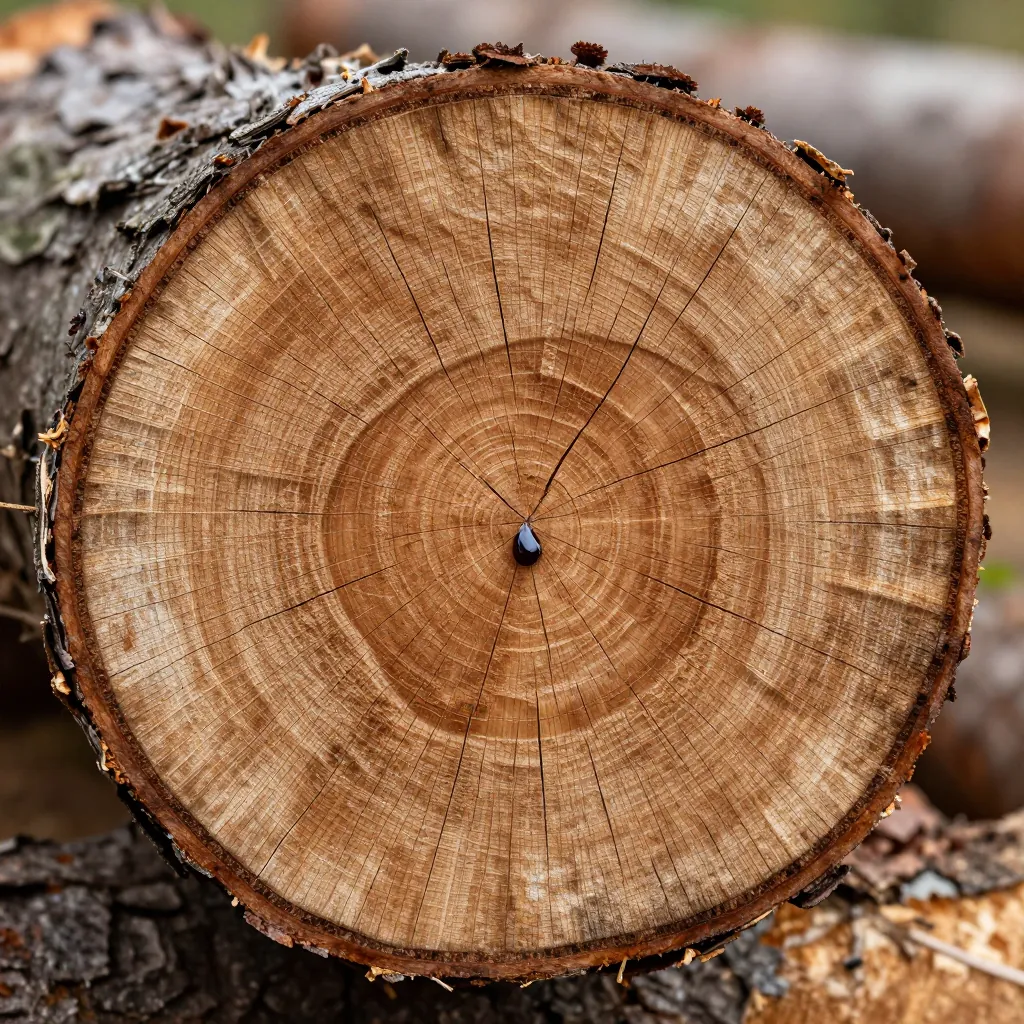
At the sawmill, logs are cut in different patterns depending on species, diameter and end use. Each pattern is defined by the angle at which the growth rings meet the face of the board. Because wood moves roughly twice as much tangentially to the rings as it does radially, this angle governs how the board behaves.
| Pattern | Ring angle to face | Yield | Stability | Appearance |
|---|---|---|---|---|
| Plain sawn | 0–30° | Highest | Lower, prone to cupping | Wavy “cathedral” figure |
| Rift sawn | 30–60° | Lowest | High | Straight, quiet grain |
| Quarter sawn | 60–90° | Low | Highest | Straight stripes, ray fleck in oak |
Plain sawn
The log is sliced with parallel cuts. It is the simplest, fastest and least wasteful method, which is why most construction and packaging lumber is produced this way. The drawback is greater movement across the width and a stronger tendency to cup and bow while drying.
Quarter sawn
The log is first split lengthwise into four quarters, and each quarter is sawn so that the rings run nearly perpendicular to the face. Quarter-sawn lumber barely moves in width, wears evenly and stays stable, which is why it is preferred for quality flooring, furniture, stair treads and the soundboards of guitars and violins. It takes more handling, yields less than plain sawing and needs large logs for wide boards, so it costs more.
Rift sawn
Cuts are made radially towards the centre so that every board shows rings at about 30–60°. The result is very stable stock with straight grain on all four faces, valued for parts seen from every side, such as table and chair legs. Many wedge-shaped offcuts are left between the boards, so this is the lowest-yield and most expensive method.
In practice, industrial mills combine these patterns: the log is first sawn into a cant, the side pieces become boards and the cant is cut into planks and squares. Band saws, with their thin kerf, are common for valuable logs, while circular saws and multi-blade frame saws handle high volumes of smaller logs.
Drying and storing lumber
Freshly sawn lumber usually contains more than 30 percent moisture and must be dried before use. Air drying is cheap but slow and rarely gets below 15–20 percent. In a kiln, temperature and humidity are controlled and the lumber reaches targets such as 8–12 percent within days or weeks. Dried lumber should be stored as follows:
- Build stacks on solid bearers or rails so that no board touches the ground.
- Place stickers of equal thickness between layers, aligned vertically above each other, so air can circulate and boards stay flat.
- Cover outdoor stacks, keep rainwater from running underneath and clear bark, weeds and organic debris around them.
- Best of all, keep stock in a dry, well-ventilated, covered store, inspect it regularly and remove damaged pieces.
Summary
Good lumber comes from trees felled at the right time, bucked intelligently, sawn without delay, cut in the right pattern and dried with care. Matching the sawing pattern and moisture content to the job prevents most later problems with checking and warping. You will find timber types and volume calculations in what is timber, and CNRWOOD’s dried timber and panels on our timber page.