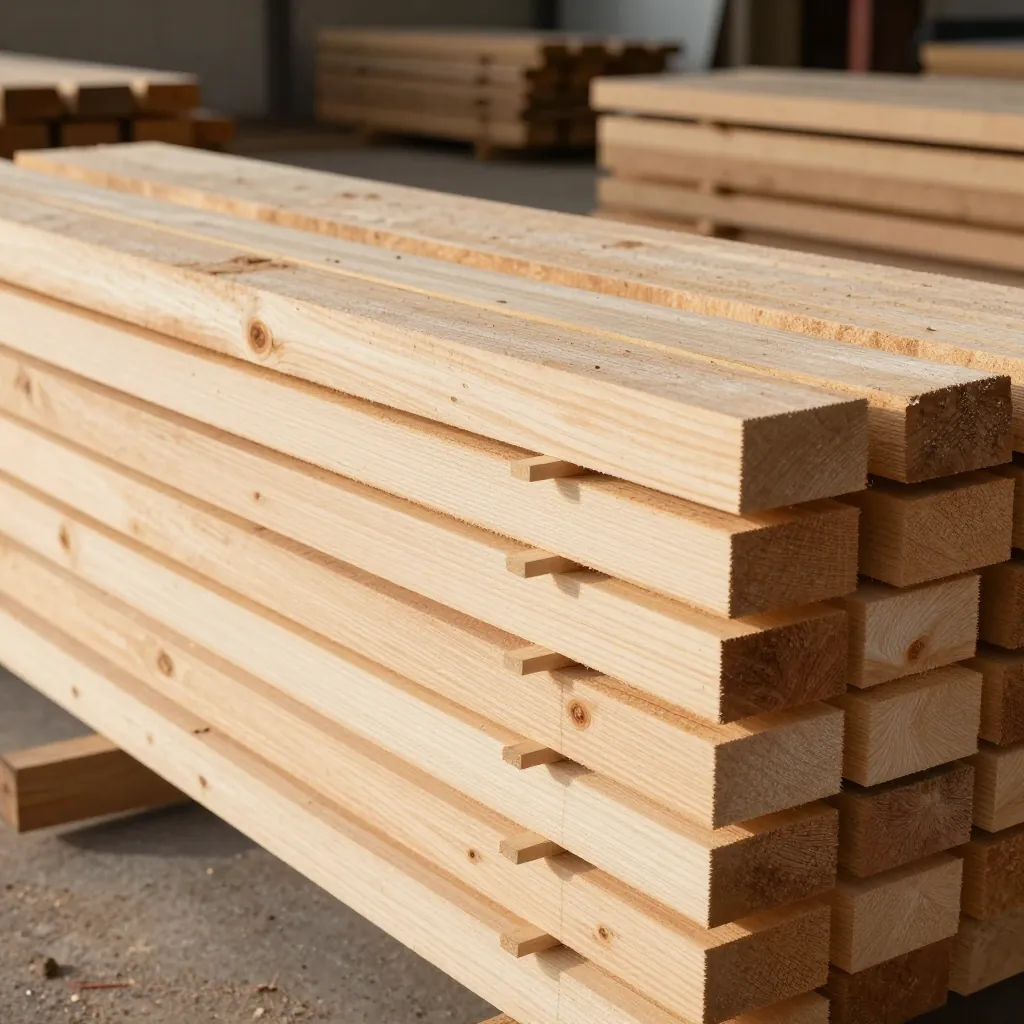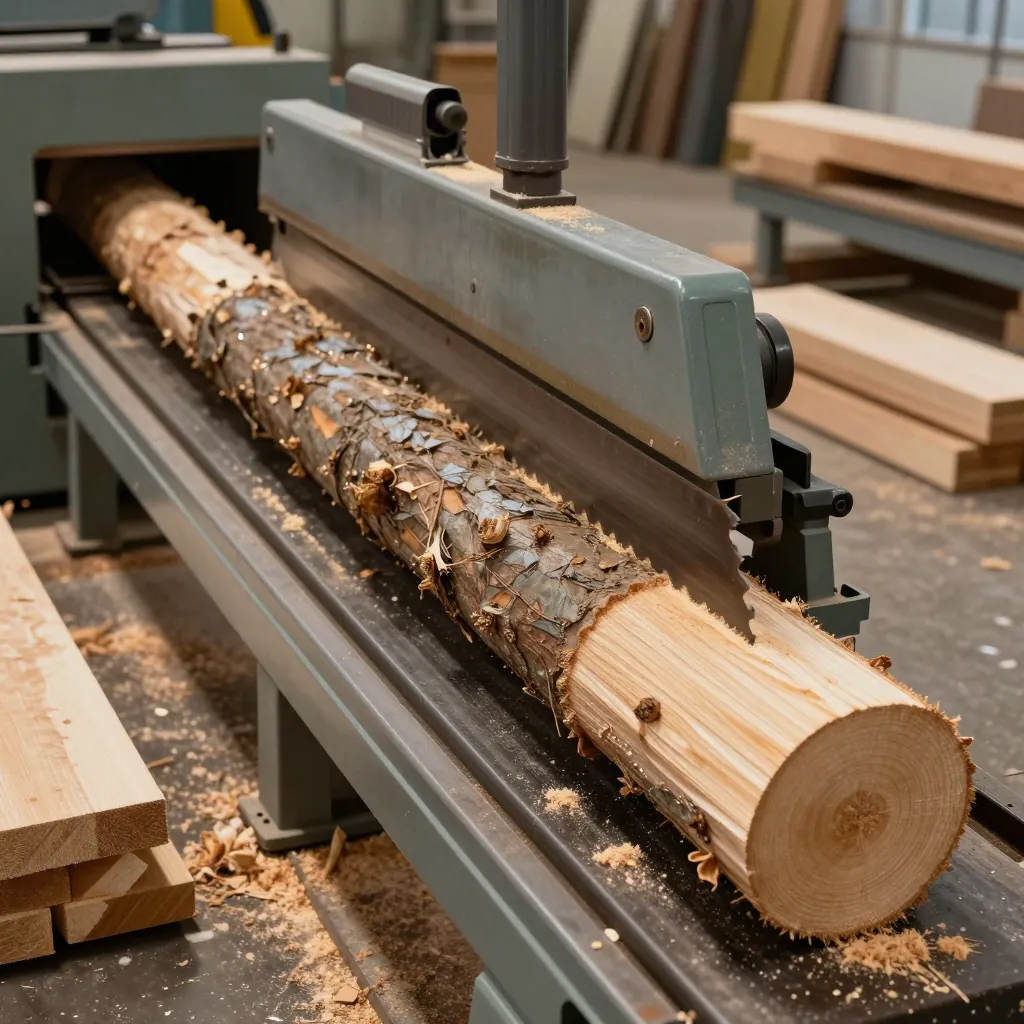

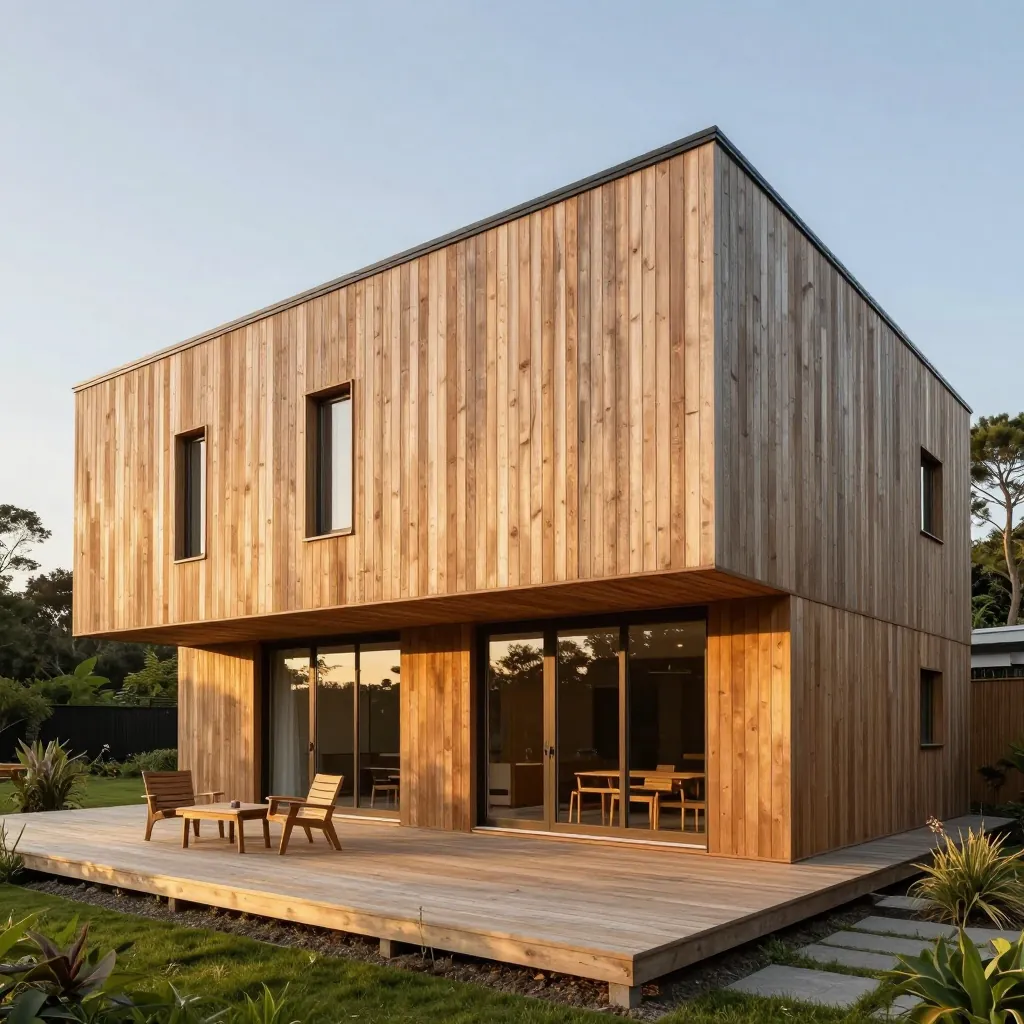
The main uses of wood are building and construction (structural frames, roofs, CLT and glulam), packaging and logistics (pallets, crates, cable drums), furniture and interiors (doors, windows, stairs, flooring, panelling), energy (firewood, pellets, chips) and the pulp and paper industry. On top of these come specialised uses such as musical instruments, boats, sports equipment and toys.
Wood covers such a wide range because it combines several qualities: high strength for its weight, easy workability, good thermal insulation, a renewable origin and the ability to store, for the life of the product, the carbon the tree absorbed while growing. About half the mass of dry wood is carbon; one cubic metre of wood holds carbon equivalent to roughly 0.9 tonnes of CO₂, depending on density.
Building and construction
Wood has been one of the most common building materials since prehistory, and in many countries it is still the basis of house building. The main applications are:
- Timber frame: a light, fast method for houses, bungalows and small commercial buildings.
- Roof trusses and joists: strength-graded spruce and pine (for example C24) for roofs and floors.
- Outdoor structures: pergolas, gazebos, verandas, decks and pool decks.
- Formwork and scaffolding: concrete formwork, formwork timber and temporary supports.
- Cladding: exterior boarding and interior wall and ceiling linings.
CNRWOOD’s timber structures are typical examples: bungalows, gazebos, verandas and timber restaurant buildings.
Engineered wood: CLT and glulam
Engineered wood products were developed to overcome the size limits and defects of solid timber, and they have taken wood into multi-storey buildings.
- CLT (cross-laminated timber): large panels made by gluing layers of boards at right angles to each other. They serve as both load-bearing and enclosing elements in walls, floors and roofs, and the cross-layered build gives high dimensional stability. CNRWOOD’s CLT panels are made from spruce.
- Glulam (glued laminated timber): laminations glued with their grain parallel, used for long-span roofs, halls and bridges.
- LVL, plywood and OSB: panels made from veneers or strands, widely used in floors, roof sheathing, walls and packaging.
Thanks to these products, timber buildings over 80 metres tall now exist. Panels made to precise dimensions in the factory allow fast, clean assembly on site.
Packaging and logistics
A very large share of world trade moves on wooden pallets and in wooden crates. Wooden packaging is chosen for its high load capacity, easy custom manufacture, repairability and recyclability. Custom cage crates, closed crates and OSB crates are built for machinery, spare parts and project cargo.
For international shipments, solid wood packaging must be treated and marked under ISPM 15 to stop pests moving between countries. The most common method is heat treatment, holding the core of the wood at 56 °C for at least 30 minutes. Processed panels such as plywood and OSB are exempt. CNRWOOD produces ISPM 15 compliant wooden crates and pallets.
Furniture, doors and interiors
Its warm appearance, texture and workability make wood the natural material for furniture and interiors. It can be carved, routed, turned and joined in many ways.
- Furniture: oak, walnut, beech and ash for solid furniture; plywood and wood-based panels for carcasses and internal parts.
- Doors and windows: the door stile that forms the inner frame of a door leaf is made either finger-jointed or from solid timber; it prevents warping and gives the door a true, stable body.
- Stairs, flooring and panelling: hard species such as oak and beech where wear resistance matters.
- Decoration: shelves, consoles, wall panels and slatted acoustic linings.
Energy, paper and other uses
According to FAO data, roughly half of all wood harvested worldwide is still used as fuel. Modern bioenergy uses pellets, briquettes and chips alongside firewood, much of it made from sawmill and furniture-industry residues. The paper and board industry is built on the cellulose fibres of wood.
| Use | Typical products | Common species / materials |
|---|---|---|
| Construction | Frames, roofs, CLT, glulam | Spruce, pine, fir |
| Outdoor | Decks, pergolas, cladding | Treated pine, iroko, thermally modified wood |
| Packaging | Pallets, crates, cable drums | Pine, spruce, plywood, OSB |
| Furniture and doors | Solid furniture, door stiles, flooring | Oak, beech, walnut, spruce |
| Energy | Firewood, pellets, chips | Processing residues, beech, oak |
| Paper | Paper, board, pulp | Pine, spruce, eucalyptus, poplar |
Specialised uses are many too: spruce for violin and guitar soundboards, okoume plywood for boatbuilding, ash and maple for baseball bats, ash and hickory for tool handles.
Conclusion
Wood does very different jobs, from a load-bearing building to a shipping crate, from an interior door to a log in the stove. With the right species, the right moisture content and the right product, it offers a long-lasting and sustainable solution in all of them.