
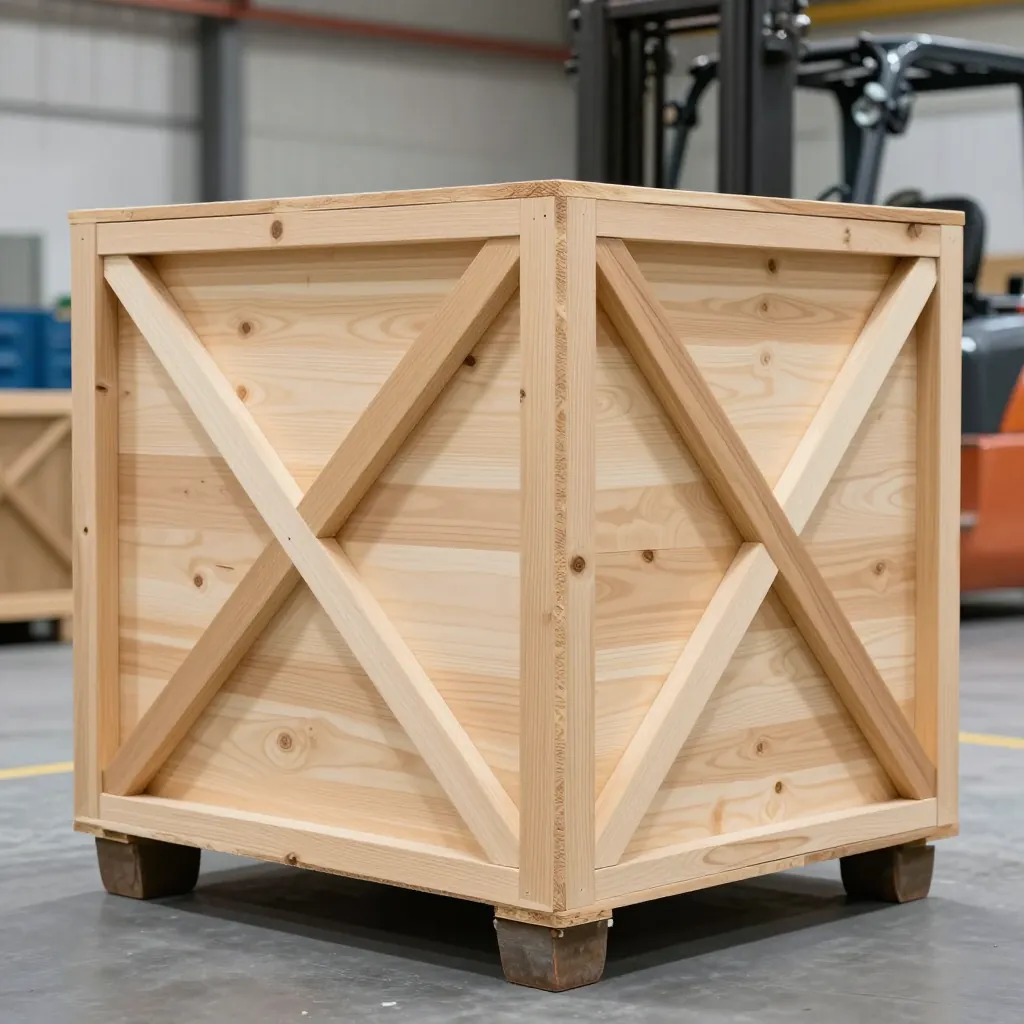
A wooden crate is wood packaging built to the dimensions of the product to protect heavy or sensitive loads, such as machinery, spare parts, glass, stone or electrical cabinets, during shipping, loading and storage. A load-bearing frame of solid timber skids and battens is either left as an open grid or clad with boards, OSB or plywood.
A crate has three basic jobs: to make the load safe to handle by forklift or crane, to protect it from impact, vibration and moisture, and to fix it inside a container or truck so that the space is used efficiently. Wood has a high strength-to-weight ratio, is quick to produce, can be repaired and breaks down in nature, which is why it is still the first choice for export packaging.
Types of wooden crates
Grid (cage) crate
An open crate with gaps between the battens. It is the most economical type in material and weight, and the load stays visible and ventilated. It suits robust goods shipped by container or truck that do not need full protection from rain and dust.
Closed crate
The sides and lid are fully clad with boards, OSB or plywood. It protects against dust, splashes and prying eyes, and suits electronics, precision machinery and goods that will be stored for a long time.
Closed crate on feet
A closed crate with block feet underneath instead of skids. The feet allow forklift entry from all four sides, which helps with loads that are moved often inside a warehouse.
Crane-ready crate
A crate for heavy loads with reinforced skids and base beams and defined points for crane slings. It is used for machinery lifted by crane at ports and on sites. Lifting points and the centre of gravity should be marked on the crate.
Crate on a Euro pallet
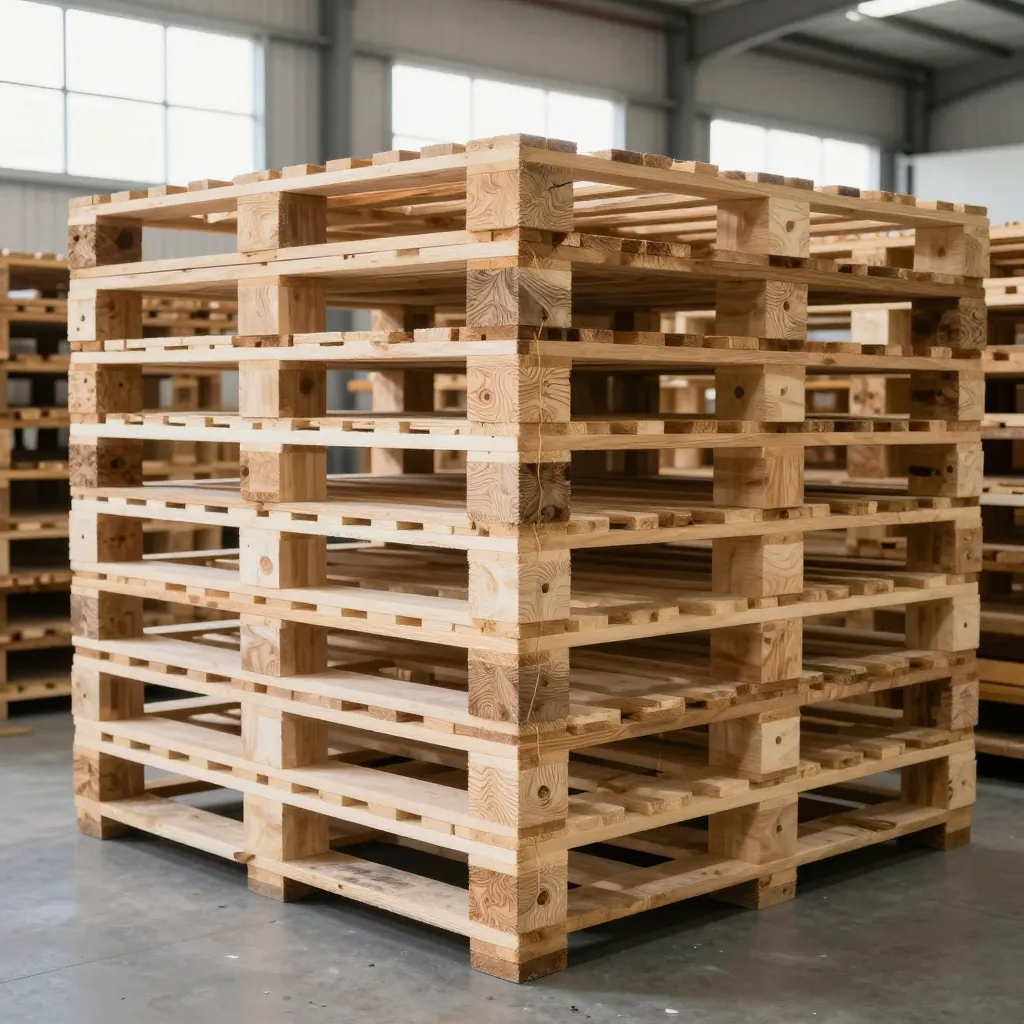
A crate built on the standard 800 × 1200 mm Euro pallet footprint. It moves easily through pallet-based warehouses, racking and road transport.
Endcap crate
A three-part system: a base and two end caps. The load is placed on the base, the end caps are fixed and the unit is stretch-wrapped. It speeds up serial and automated loading and can be used with or without crane fittings.
OSB and plywood cases
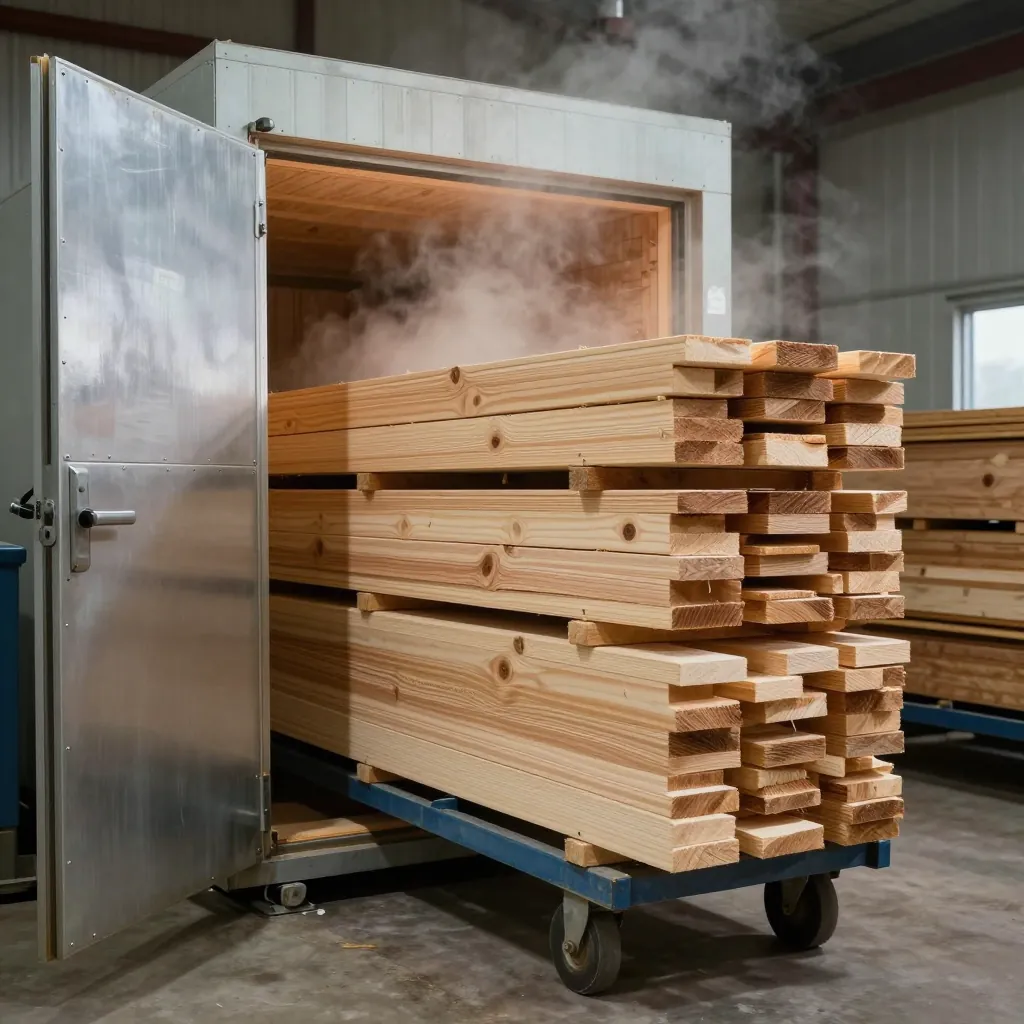
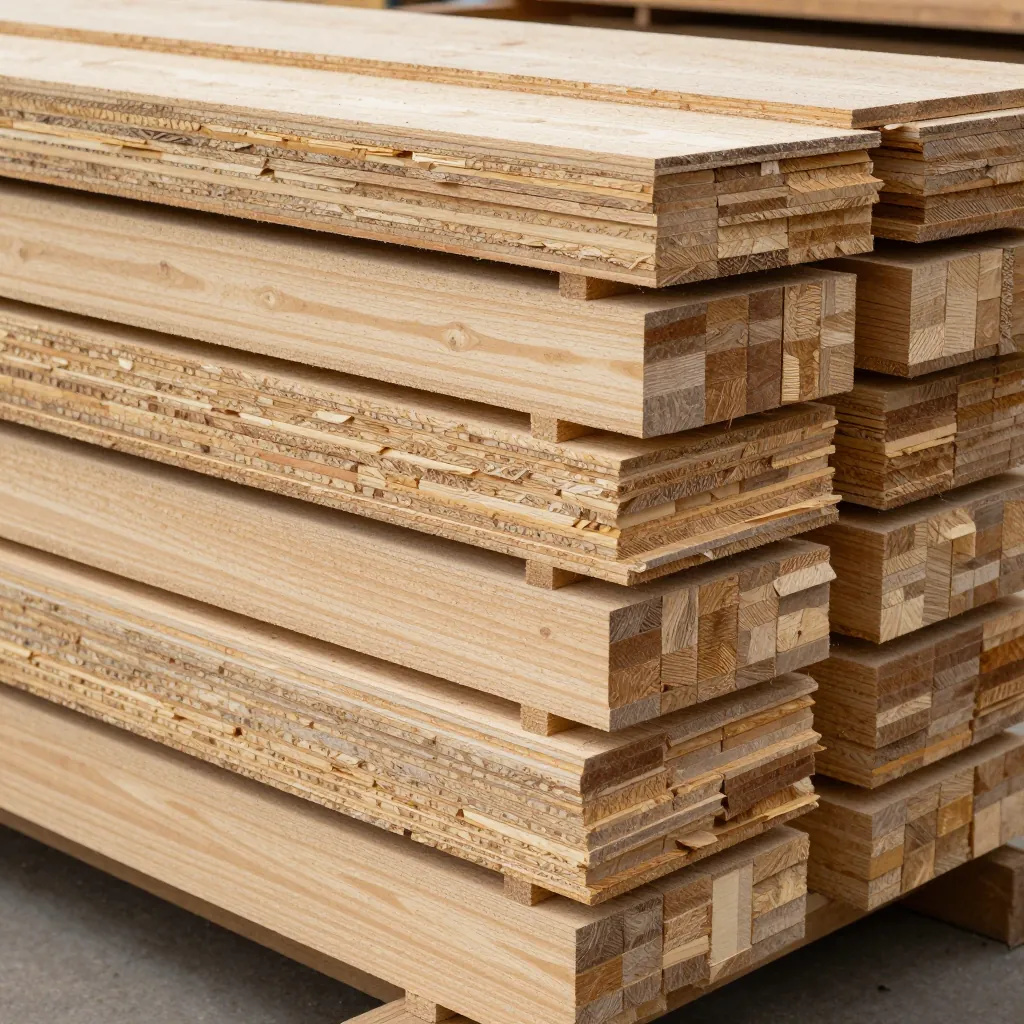
Cases whose faces are made of panels. They offer a clean, smooth surface that is easy to print on, and parts made entirely of panel material need no heat treatment. Solid skids and battens, however, still must be treated, as explained in our article on heat treatment.
How to choose the right crate
Choosing a crate starts with the product itself. The answers to these questions largely decide the type:
- Weight and centre of gravity: they set the skid section, the number of base beams and whether crane fittings are needed.
- Sensitivity: goods sensitive to impact and vibration need a closed crate, internal blocking and, if necessary, cushioning.
- Transport mode and duration: for long sea voyages, barrier foil and desiccants help against condensation. On the road a grid crate is often enough.
- Handling: will a forklift or a crane be used at the destination? Should forklift entry be on the long or the short side?
- Destination rules: in international shipments, solid wood parts must be heat-treated and marked to ISPM 15.
How to size a crate
Sizing always starts from the inner dimensions. Take the product’s length, width and height and add a margin on every side for blocking and fixing. Then add the board or panel thickness, battens and skid height to get the outer dimensions. The outer dimensions are the critical figure, because they decide whether the crate fits trucks, containers and doors.
For a first estimate, use our crate calculator. Enter the inner dimensions, board thickness and crate type to see the outer dimensions, the estimated timber volume and how many crates fit in a 20 ft and a 40 ft container. The results are estimates; the final design is confirmed against the product and loading conditions.
Container loading dimensions
Approximate inside dimensions of standard dry containers are shown below; values vary by a few centimetres between manufacturers:
| Container | Inside length | Inside width | Inside height | Door (W × H) |
|---|---|---|---|---|
| 20 ft standard | 5.90 m | 2.35 m | 2.39 m | 2.34 × 2.28 m |
| 40 ft standard | 12.03 m | 2.35 m | 2.39 m | 2.34 × 2.28 m |
| 40 ft high cube | 12.03 m | 2.35 m | 2.69 m | 2.34 × 2.58 m |
Practical points:
- Compare crate height with the door height, not the inside height, and allow for the lift of the forklift forks.
- Designing the width so that two crates fit side by side (each up to about 1.15 m) can increase container use considerably.
- In a single layer, a 20 ft container takes 11 Euro pallets and a 40 ft container 23–25, depending on the layout.
- Loads too large for a container travel in open-top or flat-rack containers, in crane-ready crates designed for them.
- Gaps between crates are filled with treated wedges and blocks so that the load cannot shift.
Conclusion
A good wooden crate is sized to the product, chosen for the way it will be transported and handled, and treated to export rules. Since 1998 CNRWOOD has measured products at its plant in Gebze and built grid, closed, crane-ready and endcap crates and Euro pallets, heat-treated to ISPM 15 and shipped worldwide.