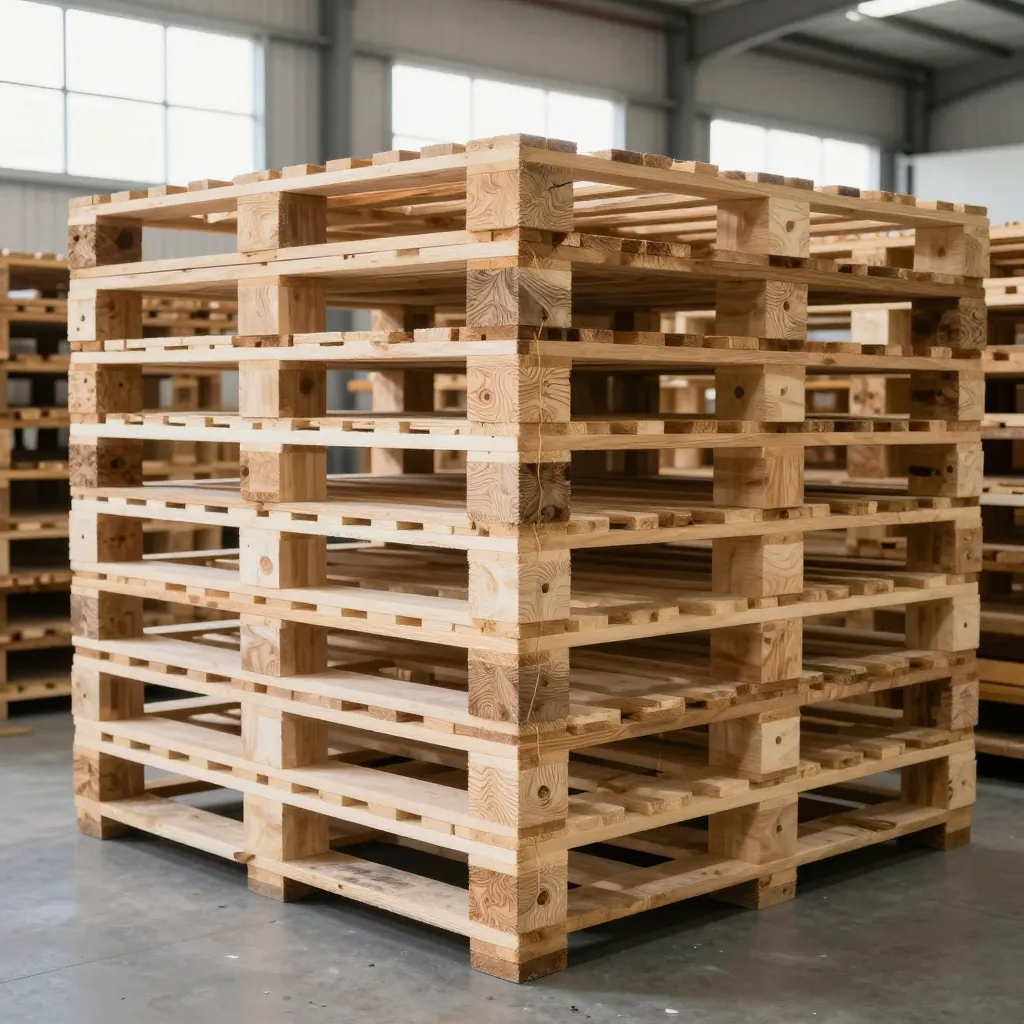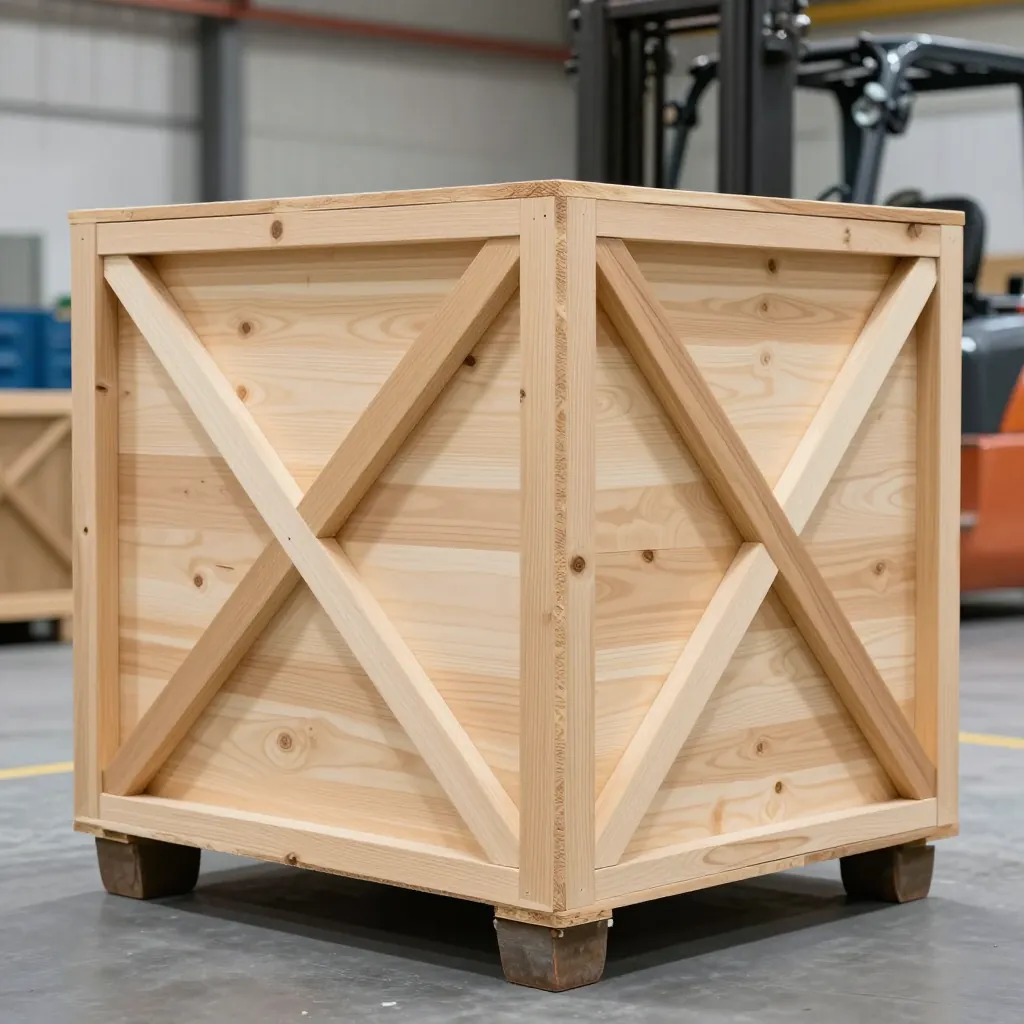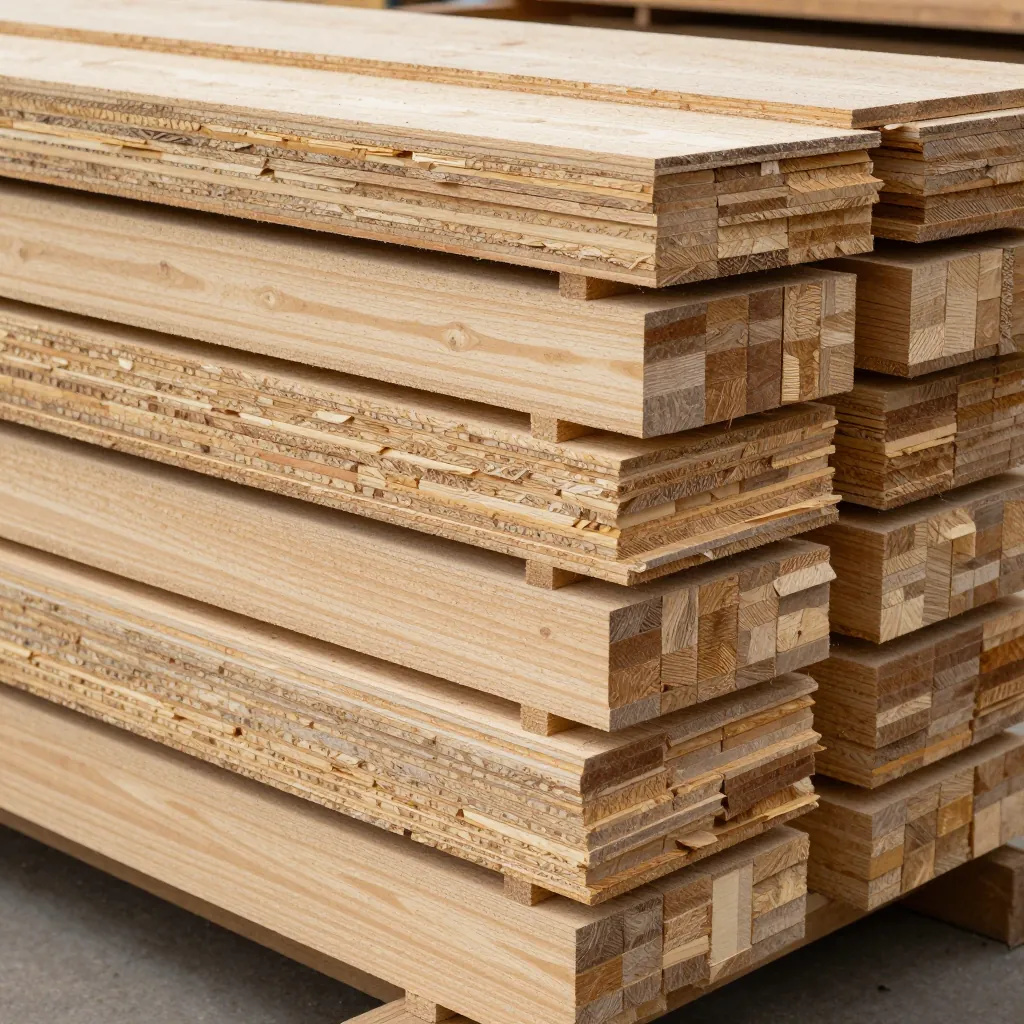

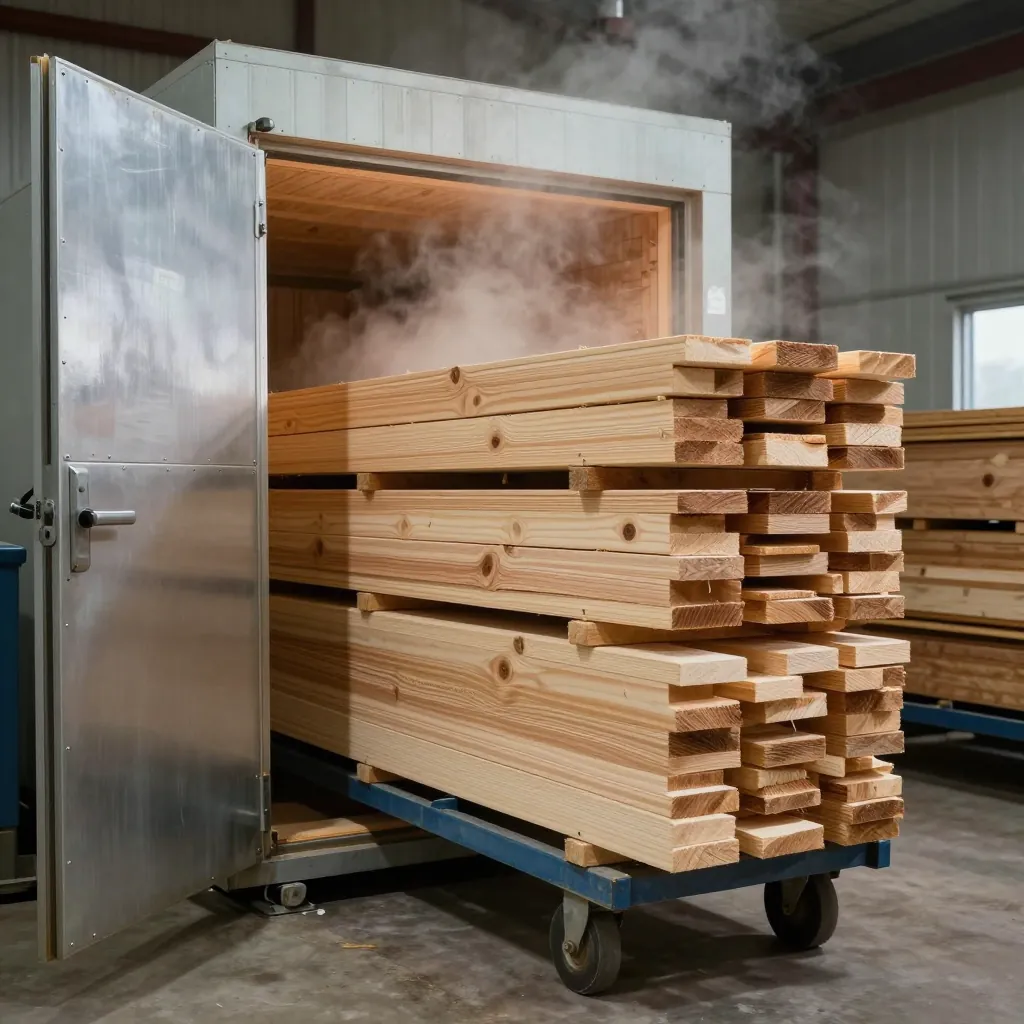
Heat treatment (HT) of wood packaging means heating the wood in a kiln until its entire profile, including the core of the thickest piece, reaches at least 56 °C, and holding that temperature for at least 30 continuous minutes. At this temperature insects, larvae, eggs and nematodes inside the wood are killed. It is the most widely used treatment approved under ISPM 15, and treated packaging receives an IPPC mark with the code “HT”.
The key point is that the requirement applies to the centre of the wood, not to the kiln air or the surface. The air in the chamber reaches 56 °C quickly, but the core of a 100 mm beam can take hours to get there.
Why 56 °C and 30 minutes?
These values are not arbitrary. The 56 °C / 30 minute schedule is based on research into the lethal temperatures of the pine wood nematode, one of the most heat-tolerant pests living in wood, and of bark beetles and their larvae. It is high enough to kill pests reliably, yet mild enough not to harm the wood’s mechanical properties and to be applied industrially at a reasonable energy cost. Heat-treated timber therefore keeps its load-bearing capacity in packaging, with no noticeable change in colour or strength.
How a heat-treatment kiln works
A heat-treatment kiln is a closed, insulated chamber. Heaters (steam, hot water, thermal oil or electric) warm the air, and powerful fans drive it through the stack. The cycle runs roughly like this:
- Stacking: debarked timber, pallets or crate components are stacked on spacer sticks so that hot air reaches every surface.
- Probe placement: temperature probes are inserted into holes drilled to the core of the thickest pieces in the load, and the holes are sealed. The slowest-heating points are measured directly.
- Heating: the kiln is typically run at 60–80 °C. Humid heat penetrates wood faster than dry air and reduces surface checking.
- Holding: the 30 minutes start only when every core probe reads 56 °C. If the temperature drops during the hold, the count starts again.
- Records and marking: the control system logs the temperature curve, which serves as evidence during audits. The packaging is then stamped with the ISPM 15 mark.
Total cycle time depends on thickness, moisture content, species, starting temperature (frozen winter timber heats much more slowly) and kiln capacity. It can range from a few hours to a full working day.
Dielectric heating (DH)
ISPM 15 also recognises dielectric heating as a second form of heat treatment. Microwaves or radio frequency heat the wood from inside. The wood, no thicker than 20 cm in its smallest dimension, must reach 60 °C for 1 continuous minute throughout its profile. The mark code is “DH”. It is fast, but the equipment is expensive, so it is used far less than conventional kilns in packaging production.
Heat treatment versus kiln drying
Both processes happen in a kiln, so they are often confused. Their goals are different:
| Feature | Heat treatment (HT) | Kiln drying (KD) | Thermally modified wood |
|---|---|---|---|
| Purpose | Kill pests (plant health) | Reduce moisture to a target value | Permanently change the wood’s structure |
| Temperature | At least 56 °C at the core | Usually 40–90 °C, by schedule | About 180–230 °C |
| Time | 30-minute hold at the core | Days or even weeks | One to several days |
| Moisture | May not drop significantly | Brought down to, for example, 8–18% | Very low, with reduced equilibrium moisture |
| Document | ISPM 15 mark (HT) | Not valid for ISPM 15 on its own | Separate product standards |
A drying schedule can count as heat treatment if it achieves 56 °C for 30 minutes at the core and is recorded at an authorised facility. The mark then still reads “HT”. A “KD” stamp on its own is not ISPM 15 evidence. The reverse also holds: heat-treated wood is not necessarily dry. It can stay moist and grow mould if stored badly.
Heat treatment gives no chemical protection either. Where resistance to decay outdoors is needed, a separate process such as impregnation is required.
What to watch after heat treatment
- Heat treatment is not a permanent shield against insects. Store treated wood dry, under cover and apart from untreated wood.
- Use only treated and marked components when repairing crates or adding parts later.
- For packaging loaded soon after treatment, allow for ventilation to limit moisture and mould.
- Check before shipment that the treatment code is visible and legible on every unit.
Conclusion
Heat treatment has one measure of success: 56 °C held without interruption for 30 minutes at the core of the thickest piece, proven by a record. In our kilns in Gebze, CNRWOOD treats its wooden crates and pallets to this requirement and marks them to ISPM 15, ready for export packaging.