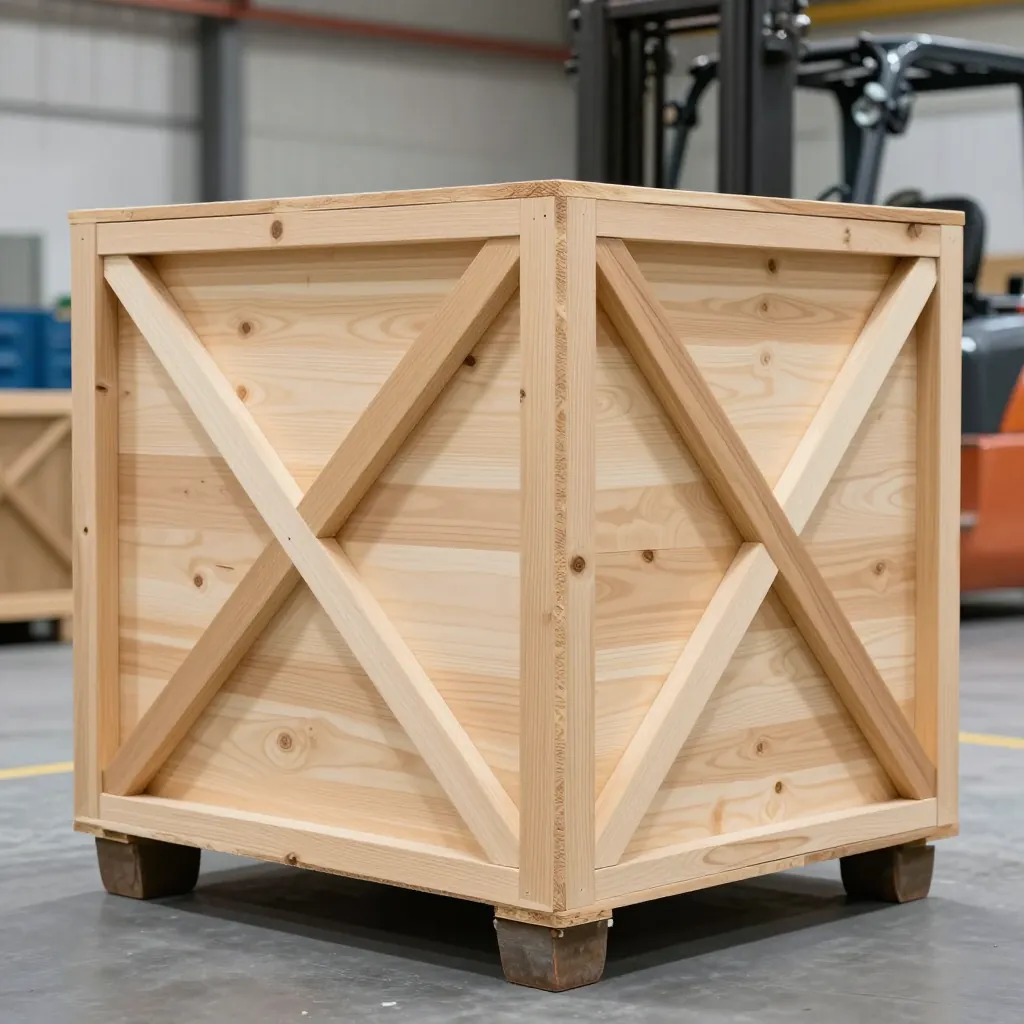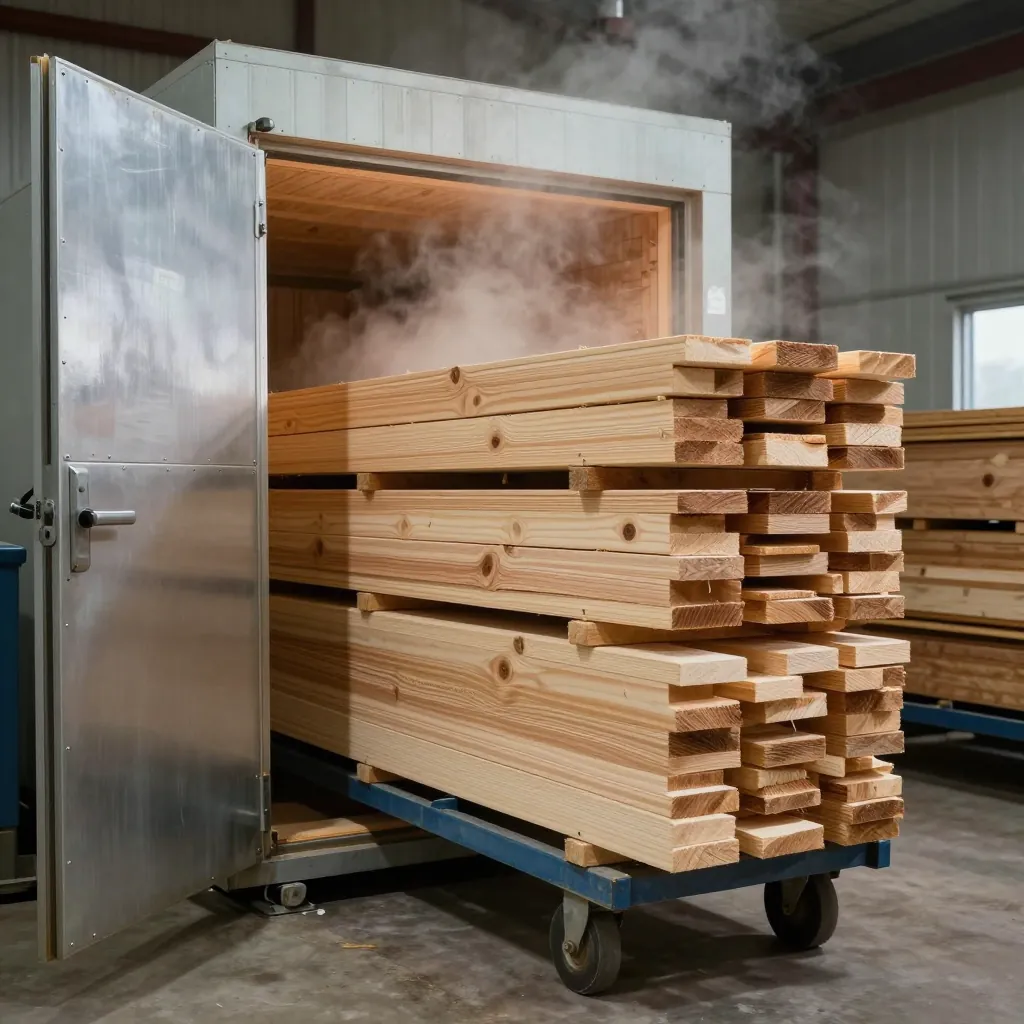

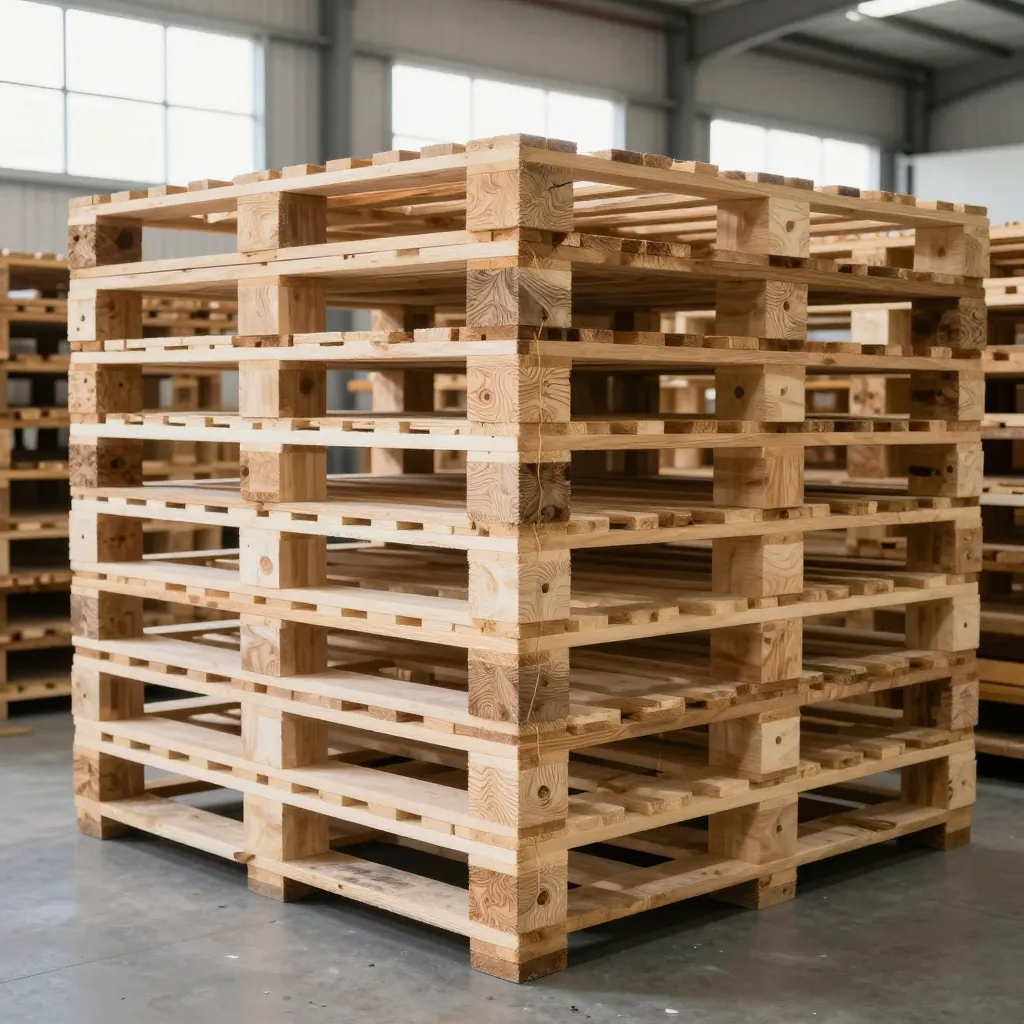
ISPM 15 is the international phytosanitary standard that prevents wood-boring insects and nematodes from travelling between countries in solid wood packaging: pallets, crates, cases, wedges, skids and dunnage. Under the standard, packaging wood is debarked, treated by an approved method and stamped with the IPPC mark.
Its full title is “Regulation of Wood Packaging Material in International Trade”. It was first adopted under the International Plant Protection Convention (IPPC) in 2002, substantially revised in 2009 and updated several times since. It covers packaging made of solid wood thicker than 6 mm, and it applies to every international shipment, not only sea freight: road, air and rail are covered too.
Why wood packaging is heat-treated and marked
Pallets and crates are usually made from low-grade, inexpensive, quickly processed wood, in which bark beetles, larvae and nematodes can survive. The packaging travels thousands of kilometres with the goods and is often left in a warehouse yard on arrival. Well-documented cases show how pests such as the pine wood nematode (Bursaphelenchus xylophilus), the Asian longhorned beetle (Anoplophora glabripennis) and the emerald ash borer (Agrilus planipennis) reached new continents this way and caused heavy losses in forests and city trees.
The logic of ISPM 15 is simple: clean the wood at the source and prove it with one mark that every border recognises. Inspectors check the mark instead of examining every pallet. Unmarked or suspect packaging can be refused, re-treated at the exporter’s cost or destroyed.
Approved treatments under ISPM 15
- HT – heat treatment: at least 56 °C held for 30 continuous minutes throughout the entire profile of the wood, core included. It is the most common method worldwide; we explain it in detail in our article on heat treatment.
- DH – dielectric heating: microwave or similar heating that reaches 60 °C for 1 continuous minute throughout the profile, for wood no thicker than 20 cm in its smallest dimension.
- MB – methyl bromide fumigation: because it depletes the ozone layer, the IPPC encourages reducing its use, and many countries, including the European Union, have banned it.
- SF – sulfuryl fluoride fumigation: a later addition to the standard, used only to a limited extent.
Whatever the treatment, the wood must first be debarked. Only small, visually separate pieces of bark are tolerated: less than 3 cm wide, or, if wider, with a surface area under 50 cm² each.
The elements of the ISPM 15 mark
The design of the mark is set by the IPPC and is the same everywhere. Inside a border, the IPPC symbol sits on the left and the codes on the right. Slogans, company logos or other information must not be placed inside the border. A typical mark reads TR-000 HT:
| Element | Example | Meaning |
|---|---|---|
| IPPC symbol | Wheat-ear figure | Registered symbol showing the packaging was treated under ISPM 15 |
| Country code | TR | ISO two-letter code of the country where treatment took place |
| Producer / treatment provider code | 000 | Unique number assigned to the facility by the national plant protection organisation |
| Treatment code | HT, DH, MB, SF | The approved treatment that was applied |
The “DB” (debarked) letters seen on older marks are no longer required, because debarking is mandatory for every treatment anyway. The mark must be legible, permanent and not transferable to other packaging. It is applied by branding, ink stamp or stencil, on at least two opposite sides of the unit, in a visible place. Red and orange are avoided, as they are reserved for dangerous-goods labels.
Who may apply the ISPM 15 mark and traceability code?
Not everyone. In each country the national plant protection organisation authorises and audits the facilities that treat and mark wood packaging. In Türkiye this is the Ministry of Agriculture and Forestry. An authorised facility receives a registration number, which is the producer code in the mark. It must keep kiln temperature records, batch data and a log of stamp use, and it is inspected regularly.
That number is what makes the system traceable. If a live pest is found in the importing country, the code leads back to the facility and to the records of that treatment. Using a mark without authorisation puts both the exporter and the country’s export reputation at risk.
Repaired and reused packaging
A marked pallet can be reused many times. Repairs must use treated, marked components only. If roughly more than one third of the components are replaced, the unit counts as remanufactured: old marks are removed, and the unit is treated and marked again. Treated packaging should also be stored dry and under cover so that it is not re-infested.
Not all wood packaging falls under ISPM 15. Exceptions such as plywood, OSB or wood 6 mm thick or less are covered in our article on packaging exempt from ISPM 15.
Conclusion
ISPM 15 is not a formality. It is what allows export goods to clear customs without delay. A correct mark stands for an approved treatment, an authorised facility and a traceable record. At our plant in Gebze, CNRWOOD heat-treats its wooden crates and pallets to a 56 °C core temperature for 30 minutes and marks them in line with ISPM 15.