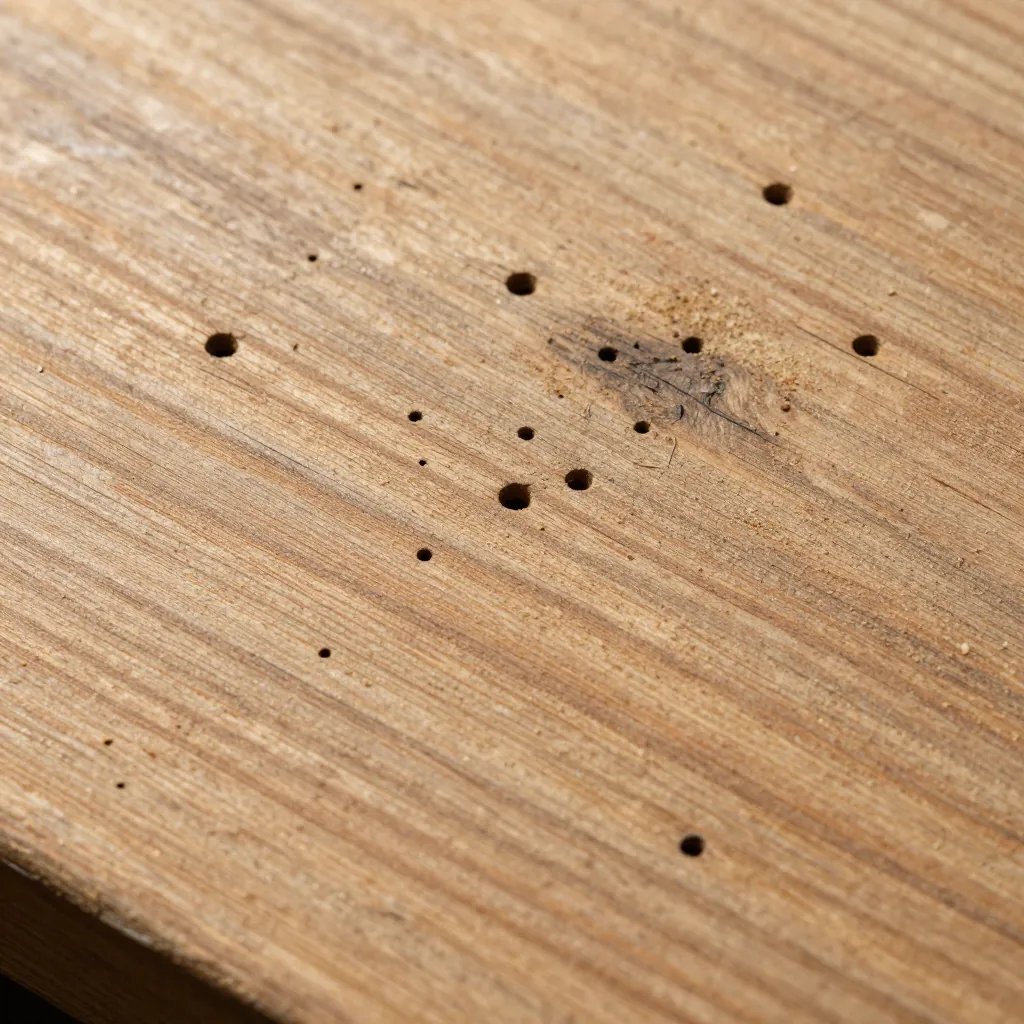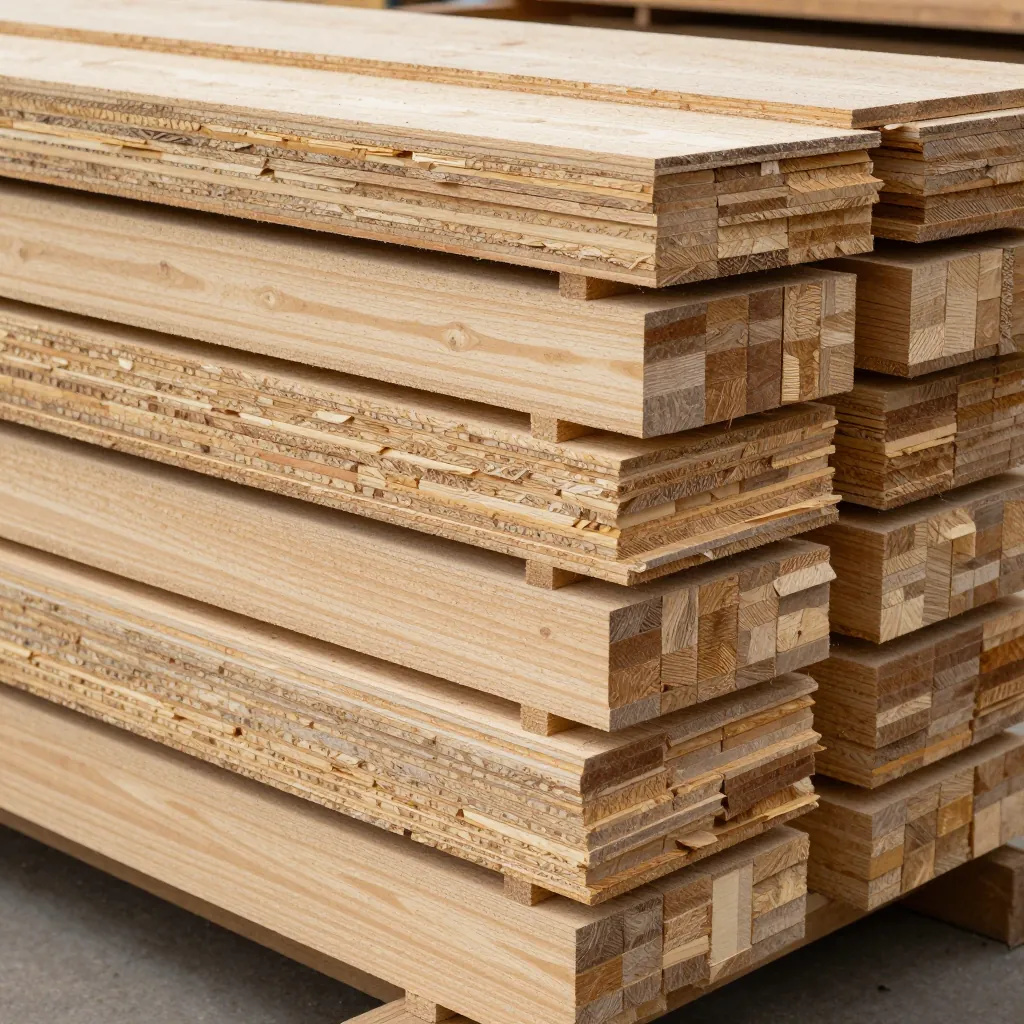

Wood impregnation is the process of forcing a chemical preservative into the cell structure of wood to protect it against fungi, insects and termites. Impregnated wood, also called pressure-treated wood, is wood that has gone through this process and therefore lasts many times longer than untreated wood outdoors, in damp places and in contact with the ground.
The key to effective impregnation is getting the preservative deep into the wood rather than leaving it on the surface. The method that does this best is vacuum-pressure impregnation in a closed tank. Surface methods such as brushing, spraying or dipping protect only a thin outer layer.
How vacuum-pressure impregnation works
Industrial impregnation takes place in a steel pressure vessel called an autoclave. A typical “full-cell” cycle has these steps:
- Preparation: the timber is debarked and dried below the fibre saturation point, generally under 25–30% moisture content. Cutting, drilling and planing are done before treatment wherever possible.
- Initial vacuum: the tank is closed and air is drawn out of the wood cells.
- Flooding: with the vacuum held, the tank is filled with preservative solution.
- Pressure: usually 8–14 bar is applied, pushing the solution deep into the wood. The duration depends on species and section.
- Final vacuum: excess solution is drawn off and surface dripping is reduced.
- Fixation: after leaving the tank, the wood is kept out of direct sun and rain for the period the preservative maker specifies, so that the preservative binds to the wood.
There are also “empty-cell” processes that use less preservative, and double-vacuum treatment for joinery. Species, section and the target use class decide which schedule is used.
Preservatives in use
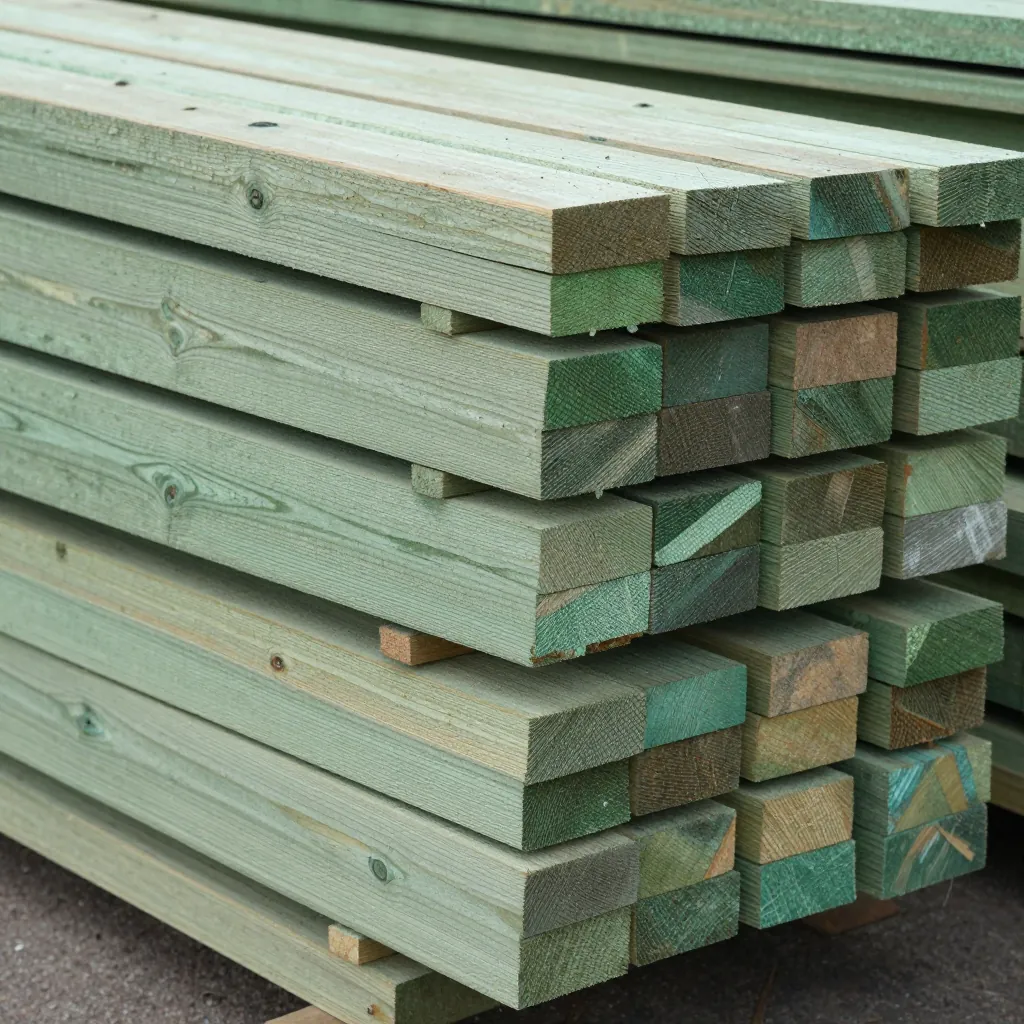
- Copper-based waterborne preservatives: copper azole and copper-quaternary systems are the most common today. They give the wood its typical green tint; brown-pigmented versions exist too.
- Boron compounds: effective against insects and fungi, but they wash out with water, so they are for interior and sheltered use only.
- Creosote: a tar-based oil, now restricted in many countries to industrial uses such as utility poles and railway sleepers.
Arsenic-containing CCA preservatives have been banned or restricted for residential and consumer uses in many countries, including the European Union.
Use classes: which treatment for which environment?
The European standard EN 335 divides the conditions wood is exposed to into five use classes. Penetration depth and preservative loading are chosen to match the class:
| Class | Environment | Typical use |
|---|---|---|
| 1 | Interior, always dry | Furniture, interior cladding |
| 2 | Interior or covered, occasional wetting | Roof trusses, roof spaces |
| 3 | Exterior, not in ground contact | Cladding, pergolas, fence boards |
| 4 | In contact with ground or fresh water | Fence posts, deck joists, garden edging |
| 5 | Permanent contact with sea water | Jetty piles, harbour works |
A common mistake is to bury a post treated only for class 3. Ground contact is the harshest condition, with both decay and termite risk, and it needs a higher preservative loading.
Species and treatability
Not all wood takes treatment equally well. The sapwood of pines such as Scots pine and Turkish red pine absorbs preservative very well, which is why most impregnated timber is pine. Spruce and fir resist penetration and may need incising, small cuts in the surface, to reach depth. The heartwood of many species also takes up little preservative. Naturally durable species such as oak heartwood or iroko can often be used without treatment, as we discuss in our article on wood durability.
Impregnation should not be confused with the heat treatment applied to packaging wood either. The heat treatment required by ISPM 15 kills pests in the wood but gives no lasting protection against decay. Impregnation gives the wood long-term chemical protection.
Where impregnated wood is used
- Garden fences, pergolas, gazebos and playground structures
- Substructures of terrace and pool decks
- Sill beams of bungalows and timber houses, and other members close to the ground
- Utility poles and railway sleepers
- Vineyard and orchard posts, landscaping elements
Pine treated to the right use class can serve for decades even in ground contact, where untreated pine would rot within a few years. Actual service life depends on preservative loading, penetration, climate and detailing.
Safe handling and maintenance
- Wear gloves and a dust mask when cutting impregnated wood, and collect the sawdust.
- Brush an end-grain preservative onto cut or drilled surfaces to protect the untreated core.
- Never burn impregnated wood in stoves, fireplaces or open fires; dispose of waste according to local regulations.
- Do not use it for surfaces in direct contact with food or for chopping boards.
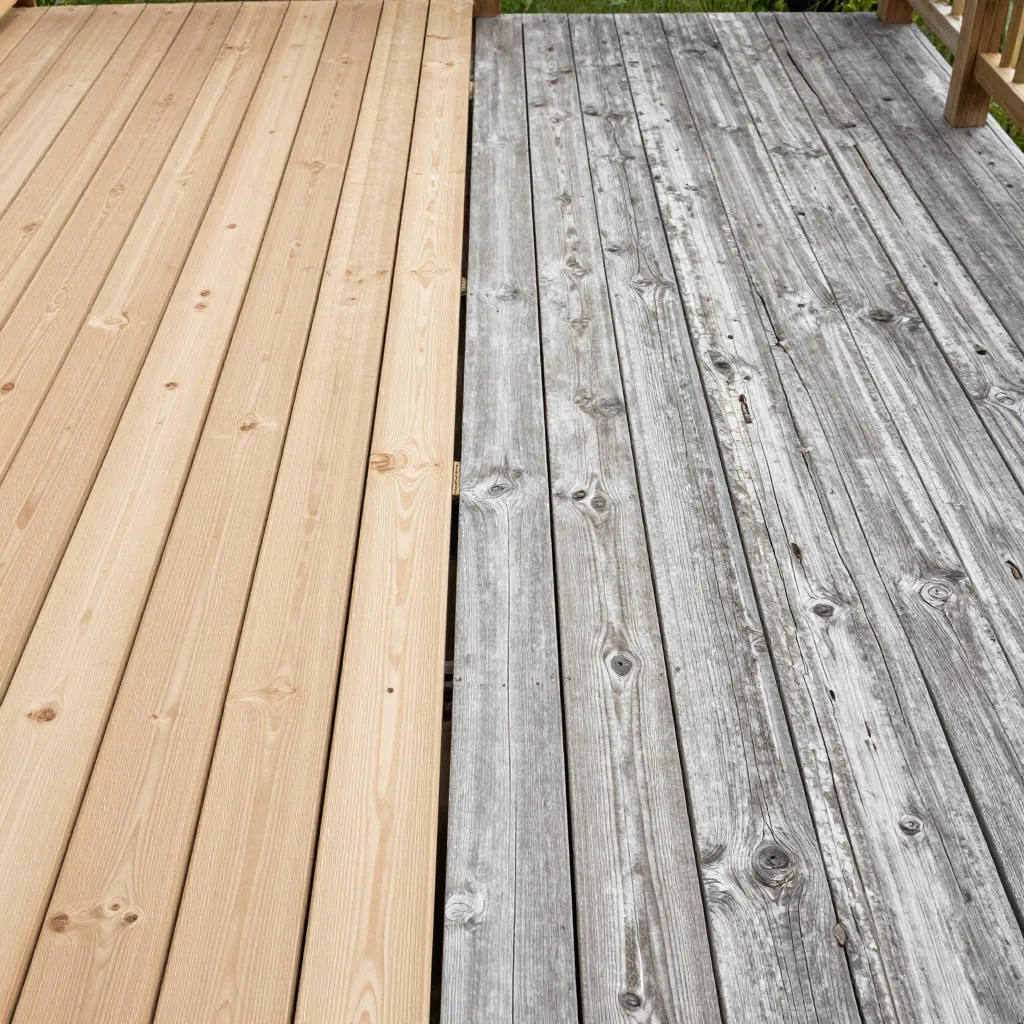
- Impregnation does not replace a finish: regular care with a suitable stain, oil or paint against sunlight and surface checking extends service life further.
Conclusion
Impregnation is one of the most effective ways to make wood fit for its environment, but only together with the right species, the right use class and the vacuum-pressure method. In CNRWOOD’s timber structure projects and timber supply, choosing protection that matches the use class is a basic rule for wood that will be used outdoors.