
Wood durability, or more precisely natural durability, is the ability of wood to resist decay fungi and wood-destroying insects without any added protection. The European standard EN 350 ranks species against fungi in five classes, from 1 (very durable) to 5 (not durable). Teak, iroko and black locust sit at the top; spruce, fir and beech are near the bottom.
In everyday language, durability is often confused with strength. They are different properties: strength is how much load a piece of timber can carry, durability is how long it survives without rotting. A dense, strong species can decay quickly, and beech is the classic example. Below we look at what drives durability, how the classes work and how to make timber last longer.
Durability is not the same as strength
Older texts often claim that “the durability of wood increases with its density”. That is broadly true for strength: bending, compression and tensile strength rise with density, and tensile strength along the grain is many times higher than across it. Structural timber is therefore graded into strength classes such as C24 under EN 338.
Natural durability, however, depends far less on density than on extractives deposited in the heartwood: tannins, resins, phenolic compounds and oils that are toxic or repellent to fungi and insects. That is why beech, at around 720 kg/m³, is rated not durable outdoors, while the lighter iroko is rated very durable.
The EN 350 natural durability classes
EN 350 defines five classes of resistance to decay fungi. It also rates resistance to wood-boring beetles and termites separately as durable, moderately durable or susceptible. The ratings below refer to heartwood: the sapwood of every species is treated as not durable.
| Species (heartwood) | EN 350 class (fungi) | Meaning |
|---|---|---|
| Teak (natural forest) | 1 | Very durable |
| Iroko | 1–2 | Very durable to durable |
| Black locust (robinia) | 1–2 | Very durable to durable |
| Sweet chestnut | 2 | Durable |
| European oak | 2–4 | Durable to slightly durable |
| Scots pine, European larch | 3–4 | Moderately to slightly durable |
| Norway spruce, silver fir, okoume | 4 | Slightly durable |
| Beech, birch, poplar | 5 | Not durable |
The classes are statistical results of laboratory and field tests. Growth conditions and tree age cause variation within a species, which is why the standard gives a range for many timbers.
What decides how long wood lasts
- Moisture: decay fungi can only grow when wood moisture content rises above roughly 20%. A spruce roof truss kept dry can last for centuries, while an oak post set in wet soil may rot within decades.
- Use class: EN 335 sorts exposure into five use classes: dry interior (1), covered with occasional wetting (2), outdoors above ground (3), in contact with ground or fresh water (4) and sea water (5). The higher the class, the more durability or protection is needed.
- Heartwood share: the more sapwood a board contains, the lower its natural durability.
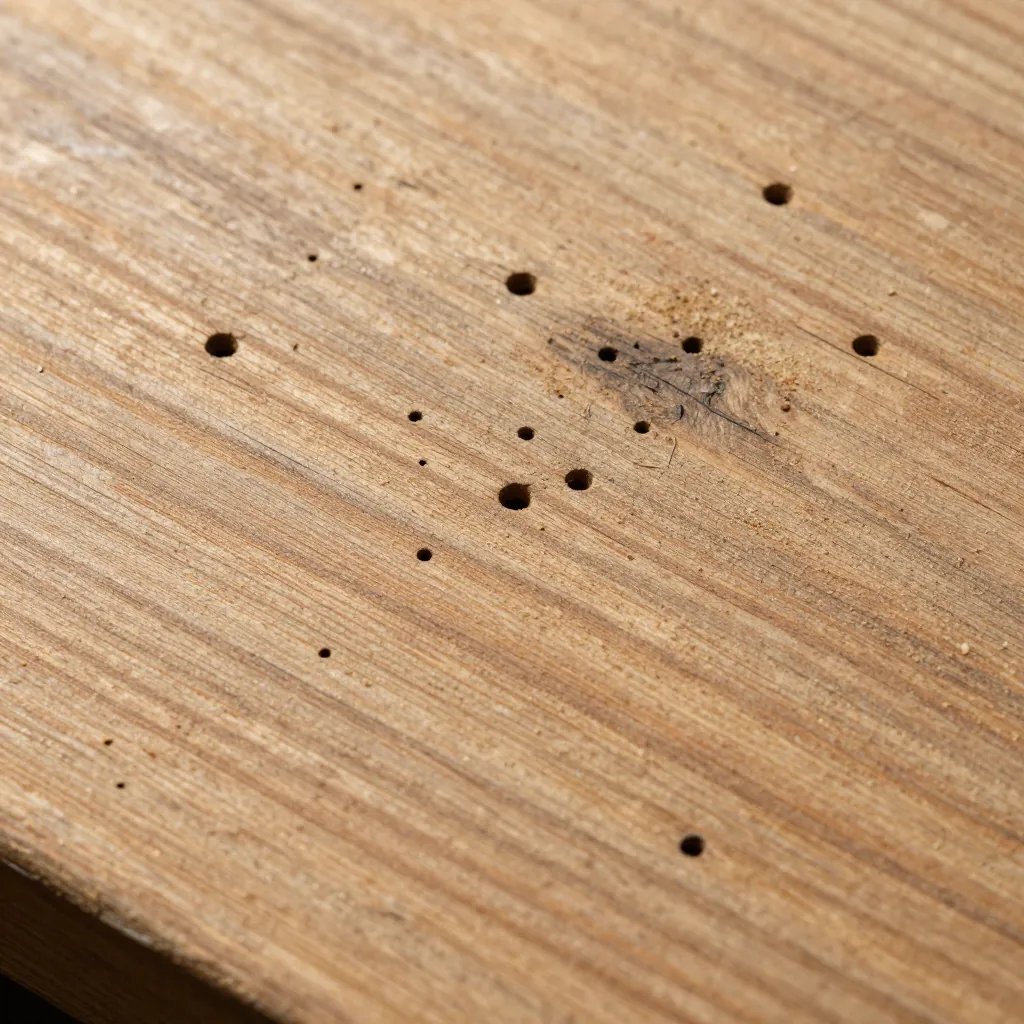
- Organisms: brown rot (mainly attacks cellulose, common in softwoods), white rot (also breaks down lignin), soft rot (very wet conditions) and wood-boring insects. Blue stain, by contrast, is a cosmetic defect and does not noticeably reduce strength.
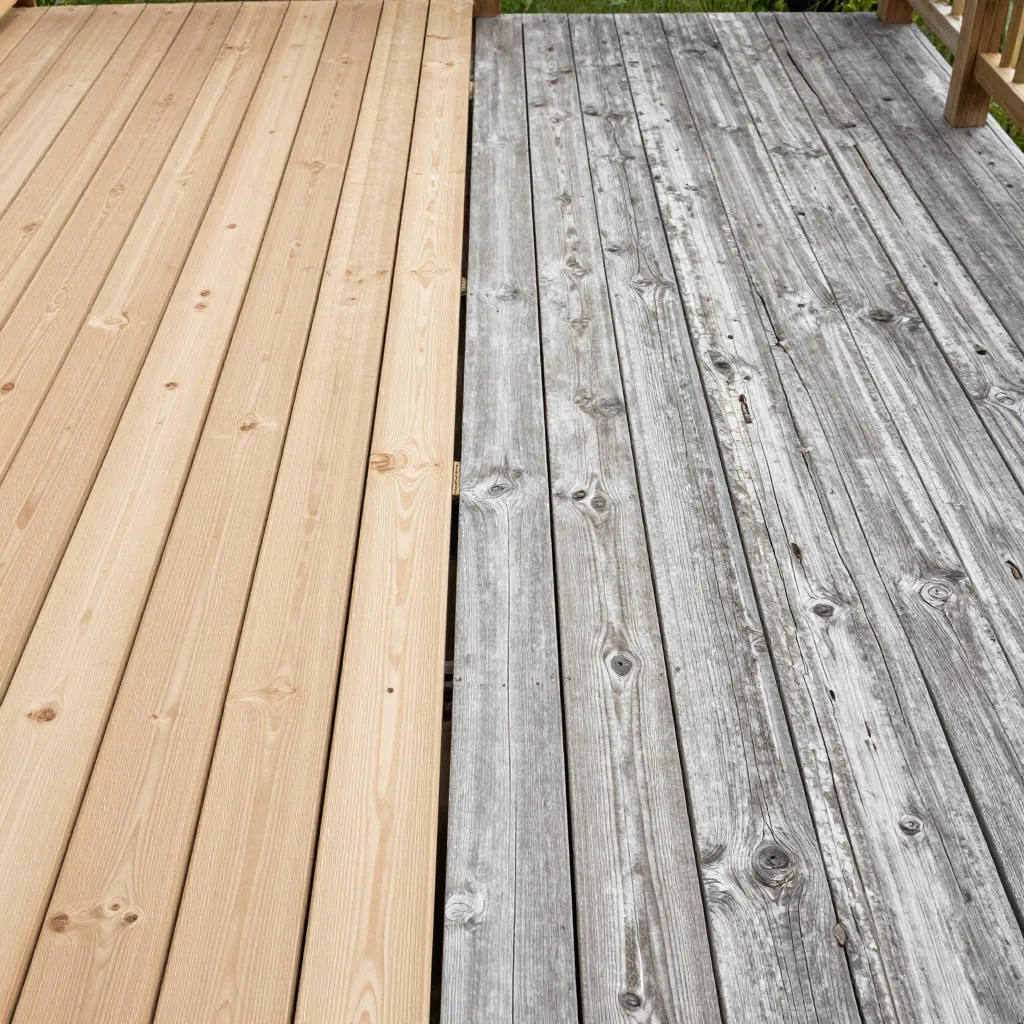
- Sun and weather: UV light degrades lignin at the surface and turns wood grey. This is surface ageing only, but the fine checks it creates let water in.
How to extend the service life of timber
- Correct drying: drying timber to suit its end use (about 8–12% indoors, 15–18% outdoors) reduces both decay risk and movement.
- Protection by design: roof overhangs, drip edges, ventilation gaps and keeping wood off the ground are the cheapest and most effective measures. Horizontal surfaces and end grain, where water collects, need particular care.
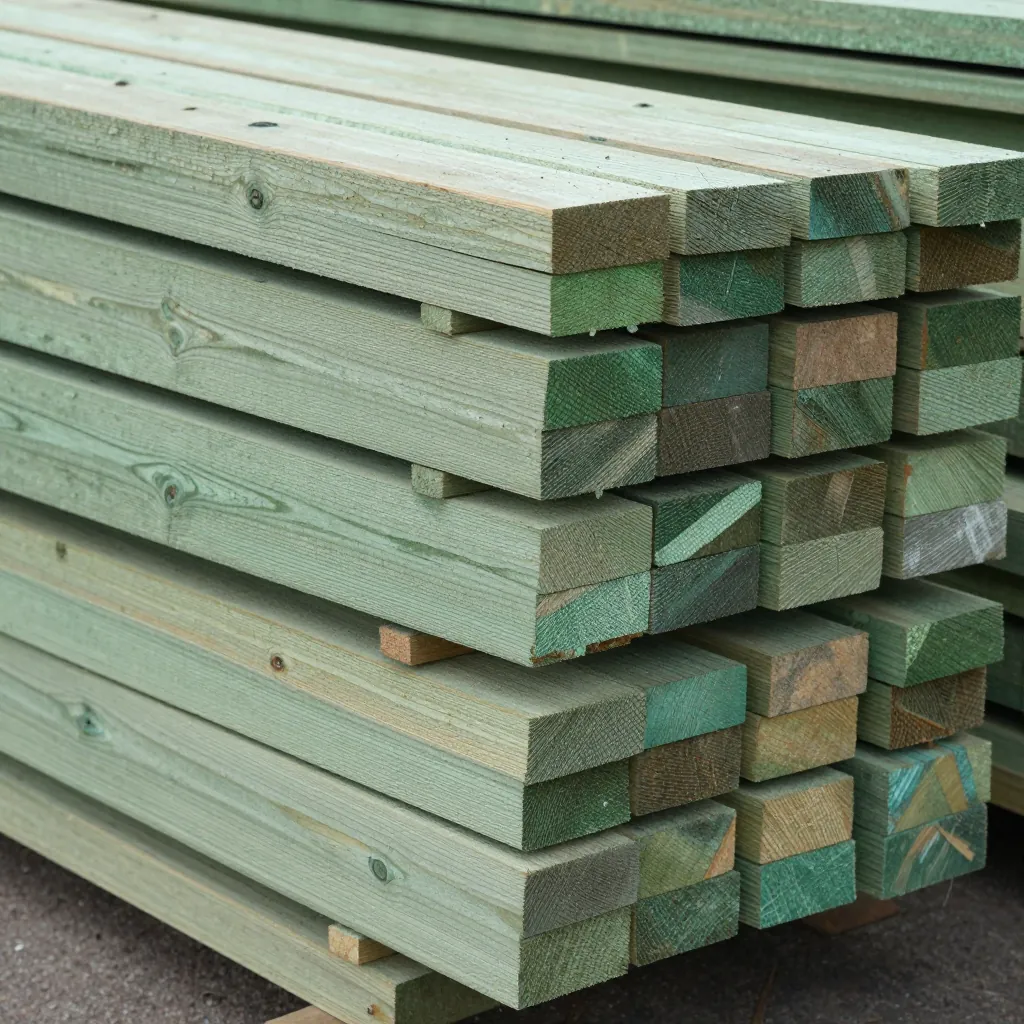
- Preservative treatment: vacuum-pressure impregnation drives preservative deep into the wood. Treatability matters: Scots pine sapwood takes treatment easily, spruce is difficult to treat.
- Thermal modification: processing wood at roughly 160–230 °C in a low-oxygen atmosphere raises durability markedly but lowers strength somewhat. Do not confuse it with ISPM 15 heat treatment (56 °C core temperature for 30 minutes), which kills pests but does not make wood resistant to rot.
- Surface finishes: varnishes, stains and oils protect against UV and surface water and must be renewed through regular maintenance.
- The right species: for ground contact use either a very durable species or properly treated timber.
For insect damage and how to prevent it, see our article on woodworm.
Conclusion: right species, right detail
The life of timber depends on matching the natural durability of the species to the conditions of use. Indoors, even a slightly durable species such as spruce can serve for generations; outdoors, good detailing and protection are essential. At CNRWOOD we follow these principles when selecting species for our timber and panels and our timber structures.