
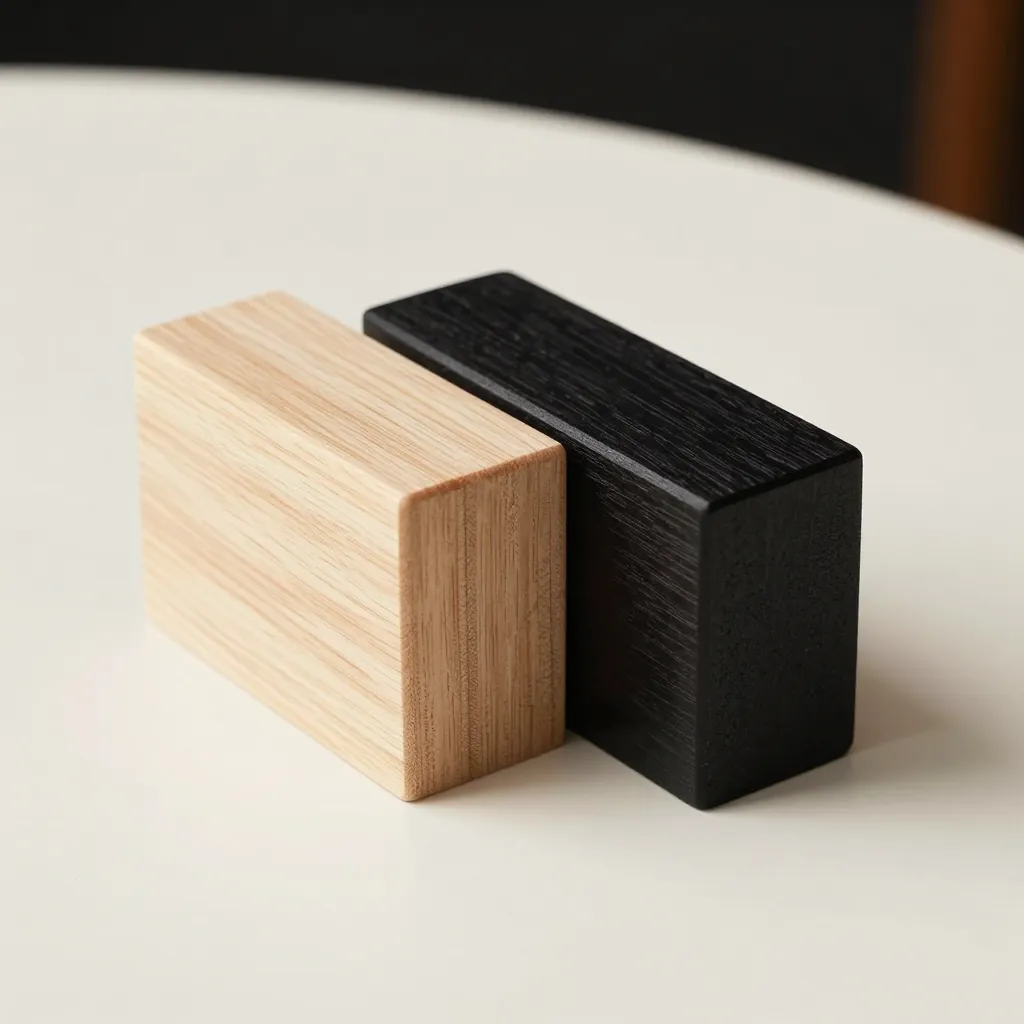
The lightest commercial wood in the world is balsa (Ochroma pyramidale), with an average air-dry density of around 160 kg/m³, about six times lighter than the same volume of water. The densest woods include black ironwood (Krugiodendron ferreum, about 1350 kg/m³) from Florida and the Caribbean, African blackwood (Dalbergia melanoxylon, ~1270 kg/m³) and lignum vitae (Guaiacum species, ~1260 kg/m³). Even when fully dry, these woods sink in water.
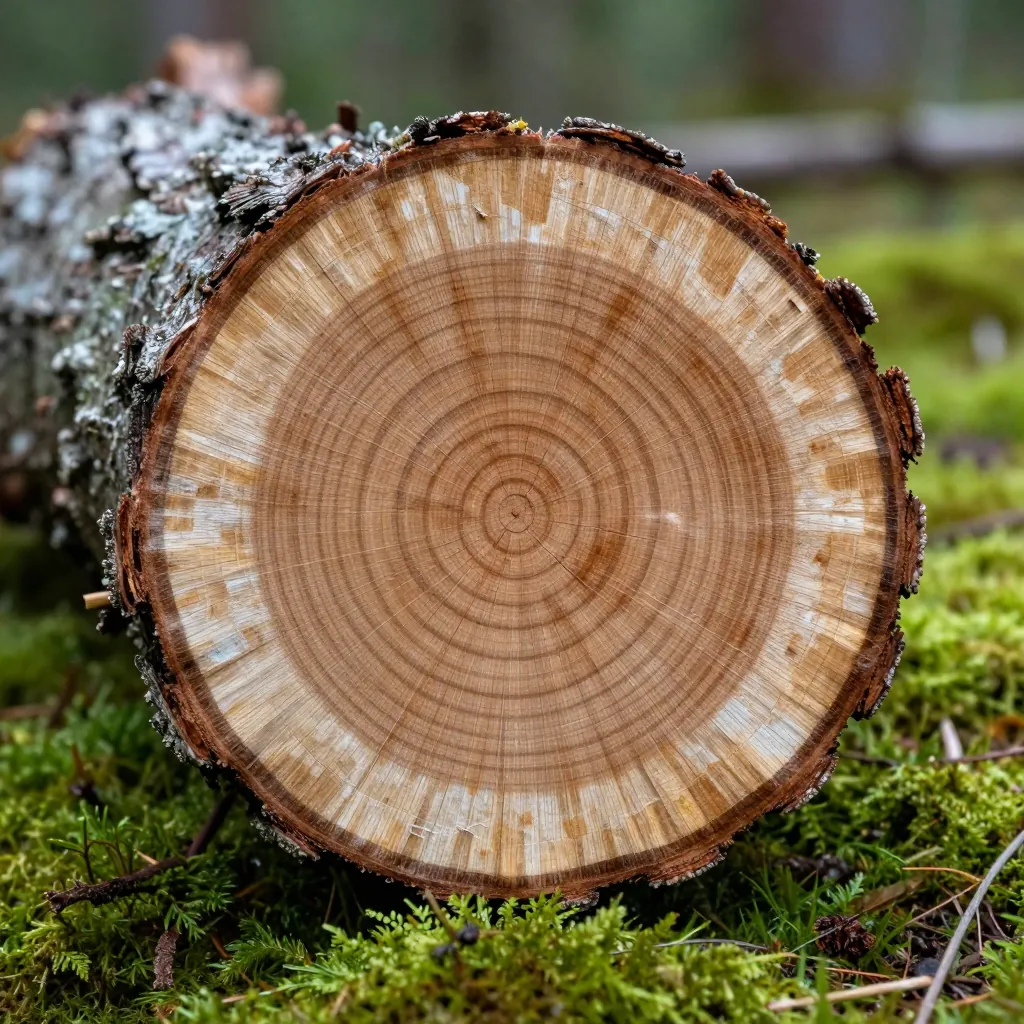
The roughly eightfold density range between species comes from cell-wall thickness. The cell-wall substance is much the same in every species, at about 1500 kg/m³. Light woods have large, thin-walled cells; heavy woods have small, thick-walled cells that are often filled with resins or other deposits.
Balsa: the lightest wood in the world
Balsa belongs to the mallow family (Malvaceae) and is native to the humid tropical forests of Central and South America, from southern Mexico to Bolivia and Brazil. Most of the world’s supply comes from Ecuador, with plantations also in Papua New Guinea and parts of Asia. Older texts that list Taiwan or southern China as part of its natural range are wrong: the trees there were introduced.
- Fast growth: it is one of the fastest-growing trees in the world, can add several metres of height a year when young and is usually harvested at 5–7 years old.
- Density range: commercial balsa typically ranges from 100 to 250 kg/m³, with about 160 kg/m³ taken as the average.
- Structure: its large, thin-walled cells are full of water in the living tree; after kiln drying, a very light and surprisingly stiff material remains.
- Durability: it is not durable against fungi and is not used unprotected outdoors.
For its weight, balsa is stiff and strong in compression. Its largest use today is as a sandwich core in wind turbine blades. It is also used for model aircraft, surfboards, boat cores, insulation and packaging. In the Second World War the de Havilland Mosquito used a balsa-plywood sandwich fuselage, and in 1947 Thor Heyerdahl’s Kon-Tiki raft was built from balsa logs.
The densest woods in the world
Rankings of the “densest wood” vary with the source, the sample and the moisture content, so it is more honest to treat the heaviest species as a group than to name a single champion. The claim, common in older articles, that snakewood is the densest wood is therefore incomplete: snakewood is very dense but not at the top of the list.
- Black ironwood (Krugiodendron ferreum): a small tree of Florida, the Caribbean and Central America. At about 1350 kg/m³ it is the species most often cited as the densest wood, though it has no commercial importance.
- African blackwood (Dalbergia melanoxylon): from the dry savannas of East Africa, about 1270 kg/m³. It is the classic material for clarinets, oboes and bagpipes, and is listed in CITES Appendix II.
- Lignum vitae (Guaiacum officinale and G. sanctum): from the Caribbean and tropical America, about 1230–1260 kg/m³. Its high natural resin content makes it self-lubricating, so for centuries it was used for ship propeller shaft bearings. It is listed in CITES Appendix II.
- Snakewood (Brosimum guianense): from South America, about 1200 kg/m³. Prized for its speckled, snakeskin-like figure, it is used for walking sticks, violin bows and inlay.
- Ebony (Diospyros species): Gaboon ebony, at about 950–1000 kg/m³, is dense but lighter than the species above; it is used for piano keys and instrument fingerboards.
Density comparison table
The values below are average air-dry densities at 12% moisture content. Variation of ±10–20% within a species, depending on growing conditions, is normal.
| Species | Botanical name | Approx. density (kg/m³) |
|---|---|---|
| Balsa | Ochroma pyramidale | 160 |
| Paulownia | Paulownia tomentosa | 280 |
| Okoume | Aucoumea klaineana | 430 |
| Norway spruce | Picea abies | 450 |
| Scots pine | Pinus sylvestris | 520 |
| Iroko | Milicia excelsa | 650 |
| European oak | Quercus robur | 700 |
| European beech | Fagus sylvatica | 720 |
| Gaboon ebony | Diospyros crassiflora | ~1000 |
| Snakewood | Brosimum guianense | 1200 |
| Lignum vitae | Guaiacum officinale | 1260 |
| African blackwood | Dalbergia melanoxylon | 1270 |
| Black ironwood | Krugiodendron ferreum | 1350 |
Water has a density of 1000 kg/m³, so the species at the bottom of the table sink even when dry.
What density tells you about wood
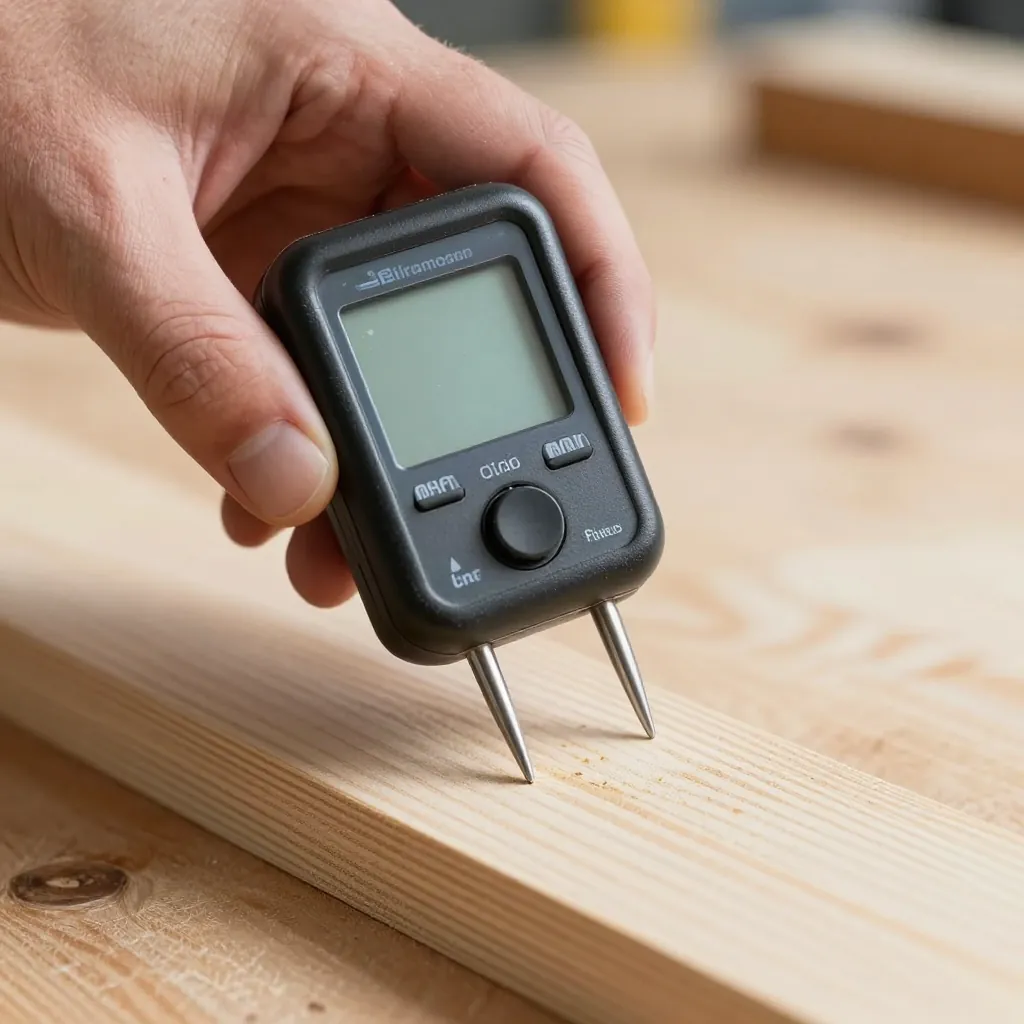
Density is the single most useful indicator of wood properties. As density rises, strength, hardness, wear resistance and fuel value per unit volume generally rise too; on the other hand, machining becomes harder and weight, and usually movement during drying, increase. We explain how density depends on moisture in our article on the physical properties of wood, and compare hardness in softwoods and hardwoods.
Density is not everything, though. Natural resistance to decay depends far more on the extractives in the heartwood than on density: heavy beech is not durable outdoors, while lighter iroko is very durable. In structures, what matters is strength relative to weight, which is why light softwoods such as spruce are preferred for roofs, CLT and glulam beams.
Conclusion: lightness and density for different jobs
Balsa’s lightness makes it ideal for engineered cores, while ironwood and lignum vitae excel in small, specialised parts that need extreme hardness and wear resistance. For everyday construction and packaging, medium-density species offer the best balance. The spruce and okoume plywood in CNRWOOD’s timber and panels range are good examples of that balance between low weight and strength.