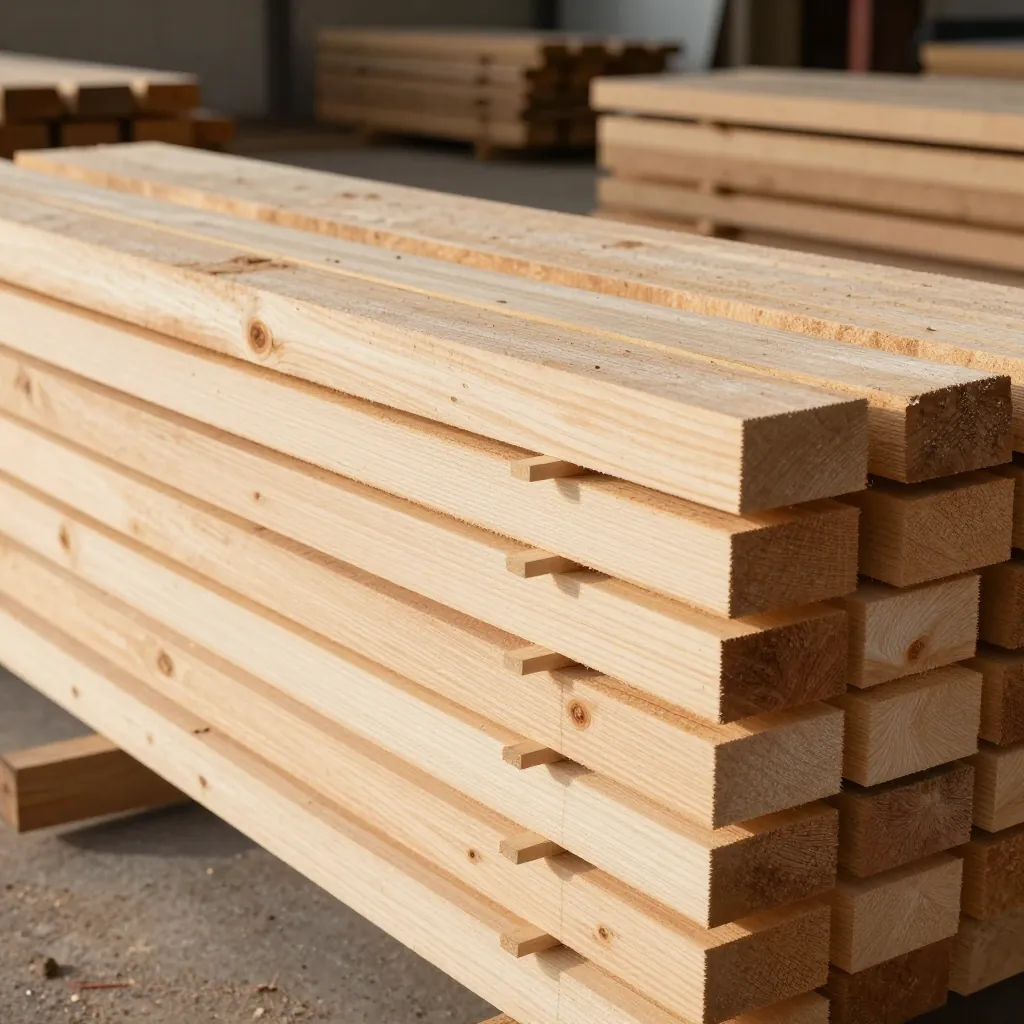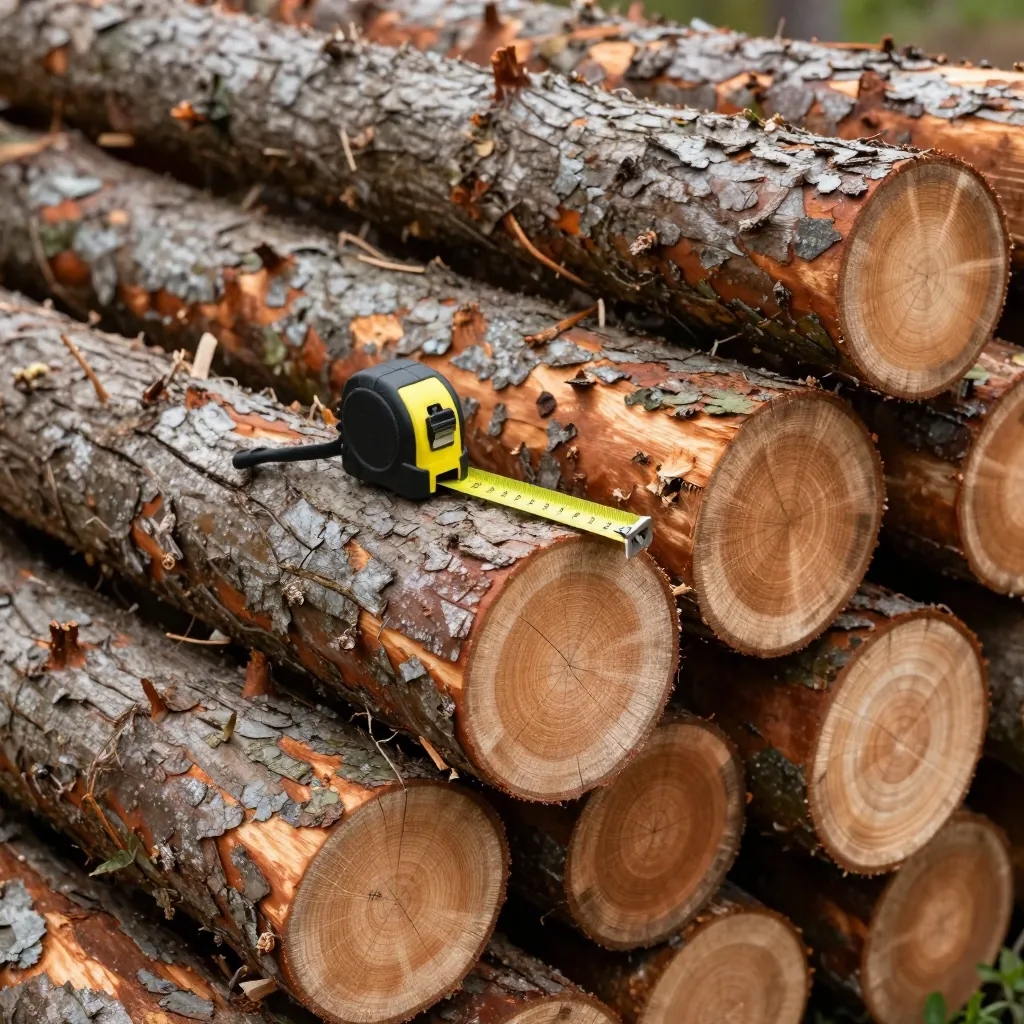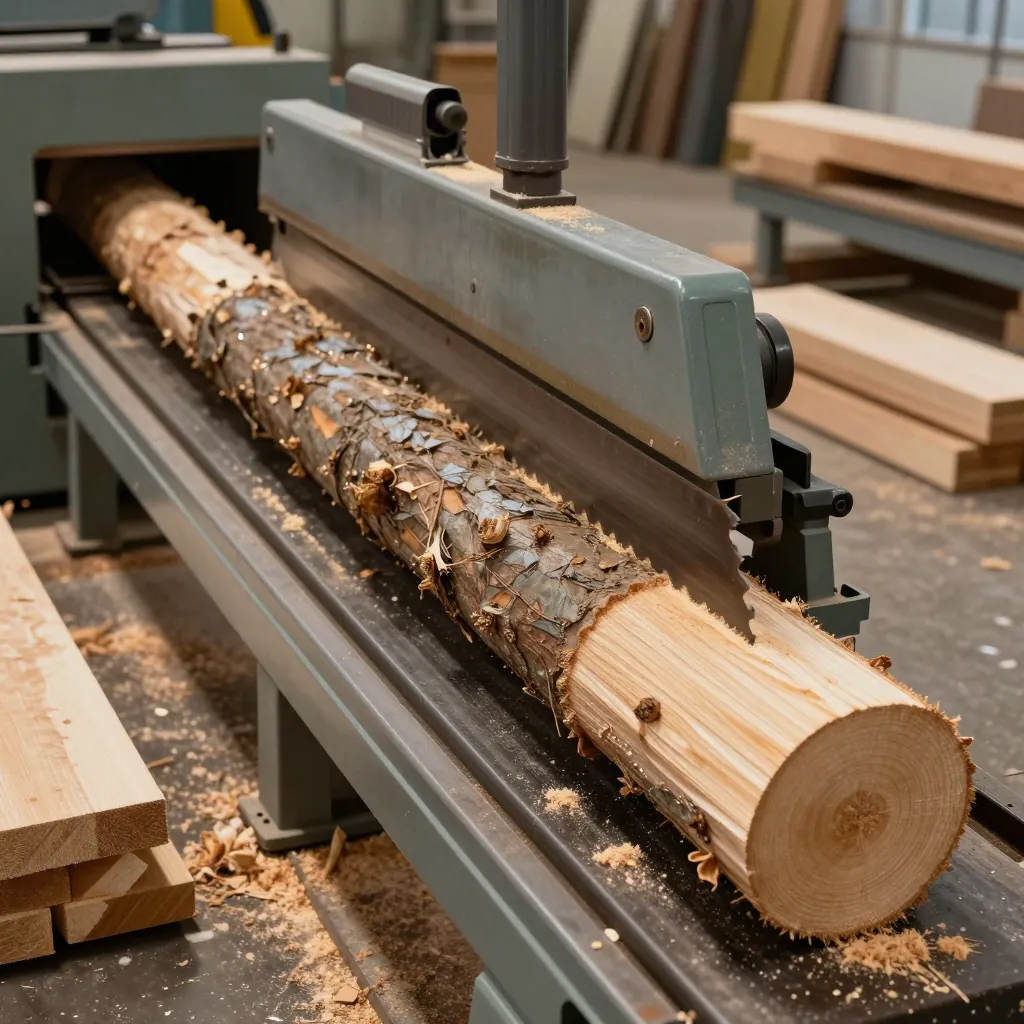

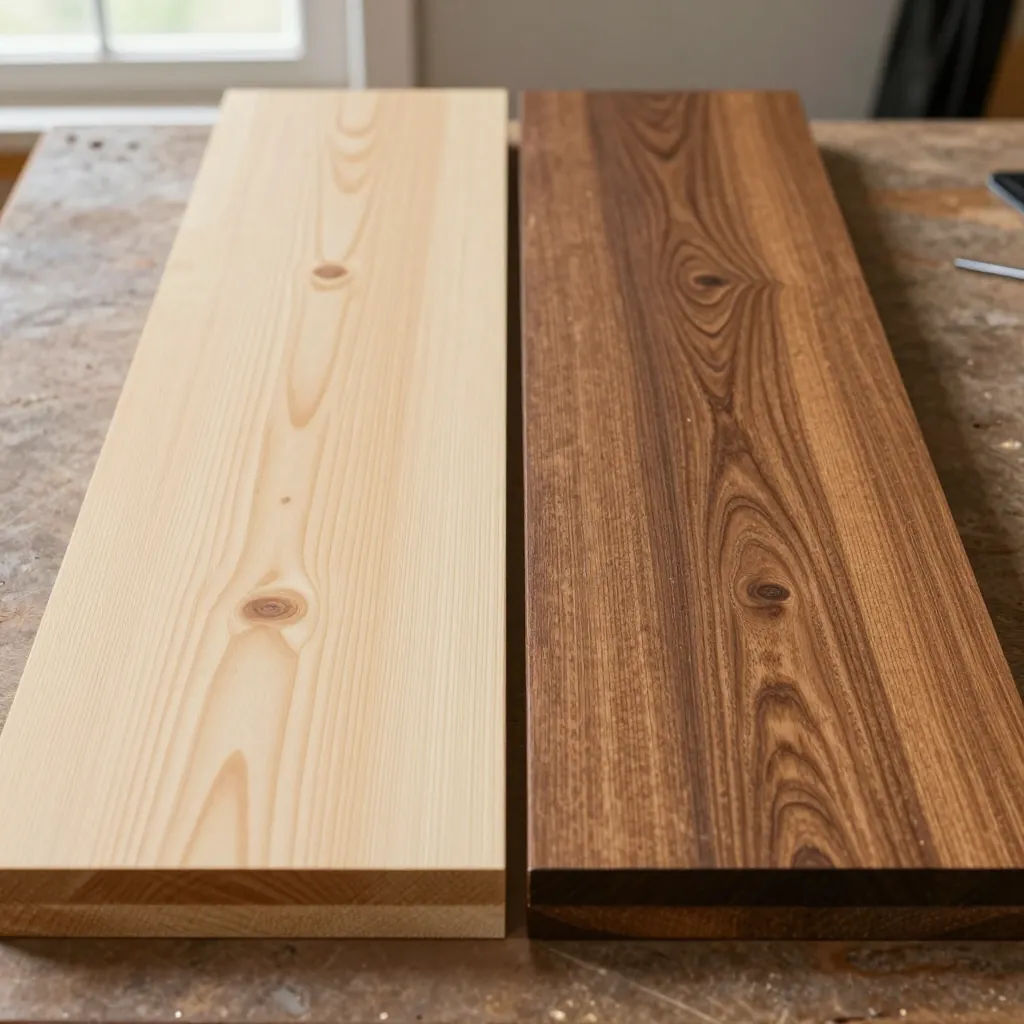
Softwood is the wood of coniferous trees such as spruce, pine, fir, cedar and larch. Hardwood comes from broadleaved trees such as oak, beech, walnut, poplar and iroko. The names are misleading: the distinction is based on botany, not on how hard the wood actually is.
That is why balsa, one of the lightest and softest woods in the world, is botanically a hardwood, while yew, which is hard and heavy, is a softwood. On average, however, most hardwoods are denser and harder than most softwoods.
The botanical difference: gymnosperms and angiosperms
Conifers are gymnosperms, meaning “naked seeds”: their seeds develop exposed on the scales of cones rather than inside a fruit. Most are evergreen, though some, such as larch, shed their needles in winter. Broadleaved trees are angiosperms, flowering plants whose seeds are enclosed in a fruit, and most temperate species lose their leaves in autumn.
Conifers are the far older group in evolutionary terms. Today they dominate the vast boreal forests of the northern hemisphere and supply most of the world’s industrial sawn timber.
How the wood structure differs
The difference is clearest under a microscope. More than 90 percent of softwood volume consists of long, slender cells called tracheids, which both conduct water and give the tree its strength. Pine, spruce and larch also contain resin canals.
Hardwoods divide the work: water travels through vessels, which appear on the end grain as pores visible to the eye or under a hand lens, while thick-walled fibres provide support. Depending on how the pores are arranged there are two types:
- Ring-porous hardwoods: in oak, ash and chestnut, large pores form a band in the earlywood, giving a bold, decorative figure.
- Diffuse-porous hardwoods: in beech, maple and poplar, pores are spread evenly through the growth ring, giving a more uniform texture.
This structure also governs how wood dries, glues, takes a finish and machines. Because softwood is more uniform and predictable, it is easier to process on an industrial scale.
Density and hardness: myths and facts
Density and hardness vary with species, growth rate and moisture content. The figures below are approximate average densities at 12 percent moisture:
| Species | Group | Approximate density |
|---|---|---|
| Balsa | Hardwood | 100–200 kg/m³ |
| Okoume | Hardwood | 400–450 kg/m³ |
| Norway spruce | Softwood | 430–470 kg/m³ |
| Scots pine | Softwood | 500–540 kg/m³ |
| European larch | Softwood | 570–620 kg/m³ |
| Iroko | Hardwood | 630–670 kg/m³ |
| Yew | Softwood | 650–700 kg/m³ |
| European oak | Hardwood | 680–750 kg/m³ |
| European beech | Hardwood | 690–750 kg/m³ |
The overlap between the two groups is obvious. We cover the extremes in a separate article on the lightest and densest woods.
Key properties compared
- Growth rate: most conifers grow straight and fast, which makes them economical to farm. Some hardwoods, such as poplar and eucalyptus, grow very fast too.
- Workability: softwoods are generally easier to saw, nail and screw. Hardwoods need sharper tooling but take a finer finish.
- Drying: softwoods dry faster. Dense hardwoods such as oak check easily unless dried slowly and carefully.
- Natural durability: this depends on the species, not the group. Oak and iroko heartwood last well outdoors, while beech decays quickly without protection. Among conifers, larch and cedar are relatively durable.
- Price: common softwoods are usually cheaper, but not always: poplar is an inexpensive hardwood and cedar a premium softwood.
Which makes better firewood?
Contrary to a common belief, the calorific value of dry wood per kilogram hardly varies between species: it is around 18–20 MJ/kg, and resinous softwoods can be slightly higher. The difference lies in volume. A log of dense hardwood contains more wood mass, so it burns longer and gives more heat per load. Softwood lights easily, burns fast and can spit sparks because of its resin. Smoke is caused mainly by moisture, not by species: any firewood should be dried below 20 percent moisture.
Typical uses
- Softwoods: construction timber, roofing and formwork, glulam and CLT, door stile, pallets and crates, plywood and OSB.
- Hardwoods: furniture, flooring, stairs, veneer, musical instruments, barrels and exterior joinery.
At CNRWOOD we use spruce for door stile, glulam and CLT because of its straight grain and stability. For exterior and durable work we offer iroko, and for light, even panels okoume plywood; see timber and panels for sizes.
Summary
Softwood and hardwood are botanical categories that separate conifers from broadleaved trees, not a measure of hardness. To choose the right wood, look past the group name to the species’ density, durability, drying behaviour and intended use.